In this article
- What does an AI visibility tool actually do?
- The 8 AI visibility tools at a glance
- Which AI visibility tool should you choose? A decision table
- Pricing compared: the cheapest way in, and what 5 clients really cost
- 1. Ahrefs Brand Radar: best if your team already works in Ahrefs
- 2. AmasoAI: best for WordPress freelancers and small agencies on a budget
- 3. LLMrefs: best for broad engine coverage at a low price
- 4. Otterly.AI: best low-cost entry for a single brand, with room to grow
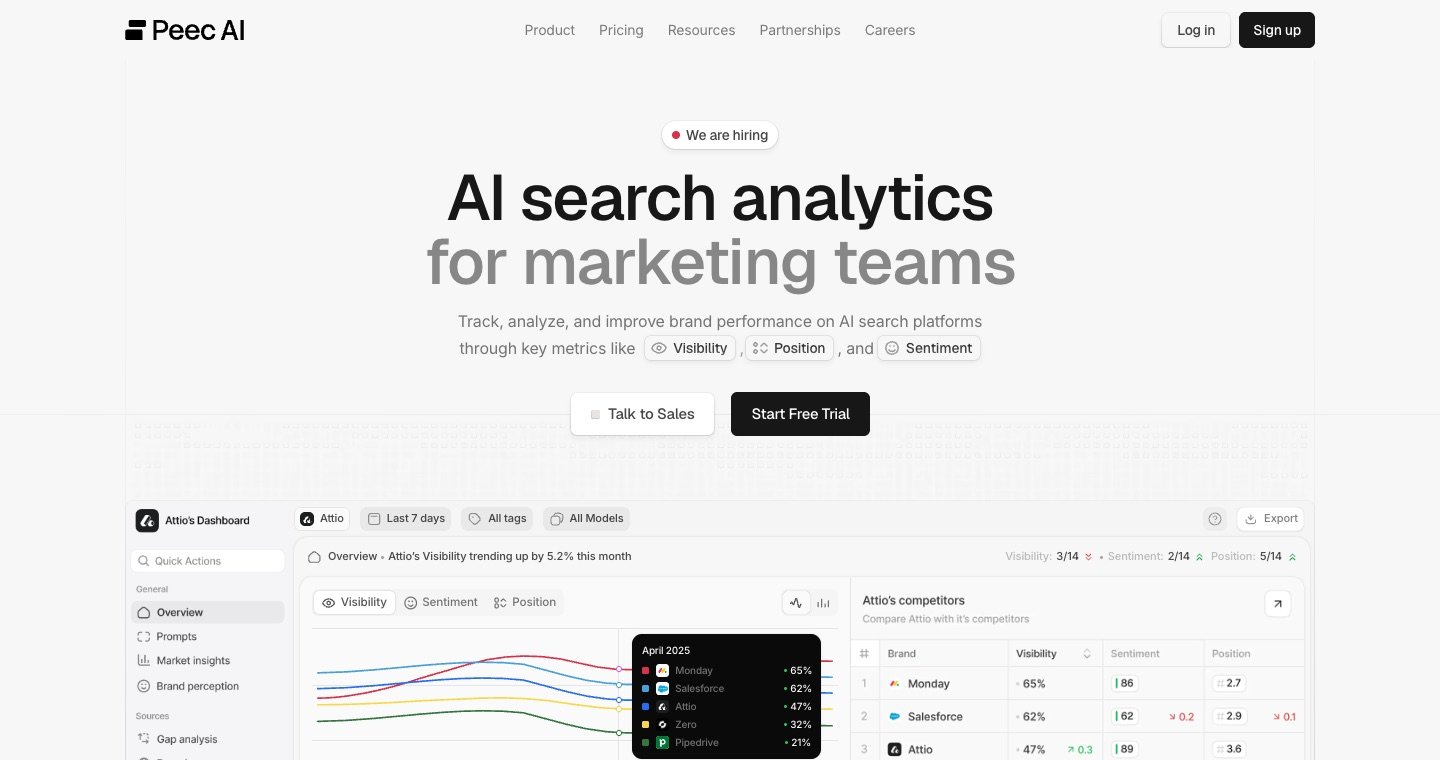
- 5. Peec AI: best-structured for agencies with 3 to 25+ clients
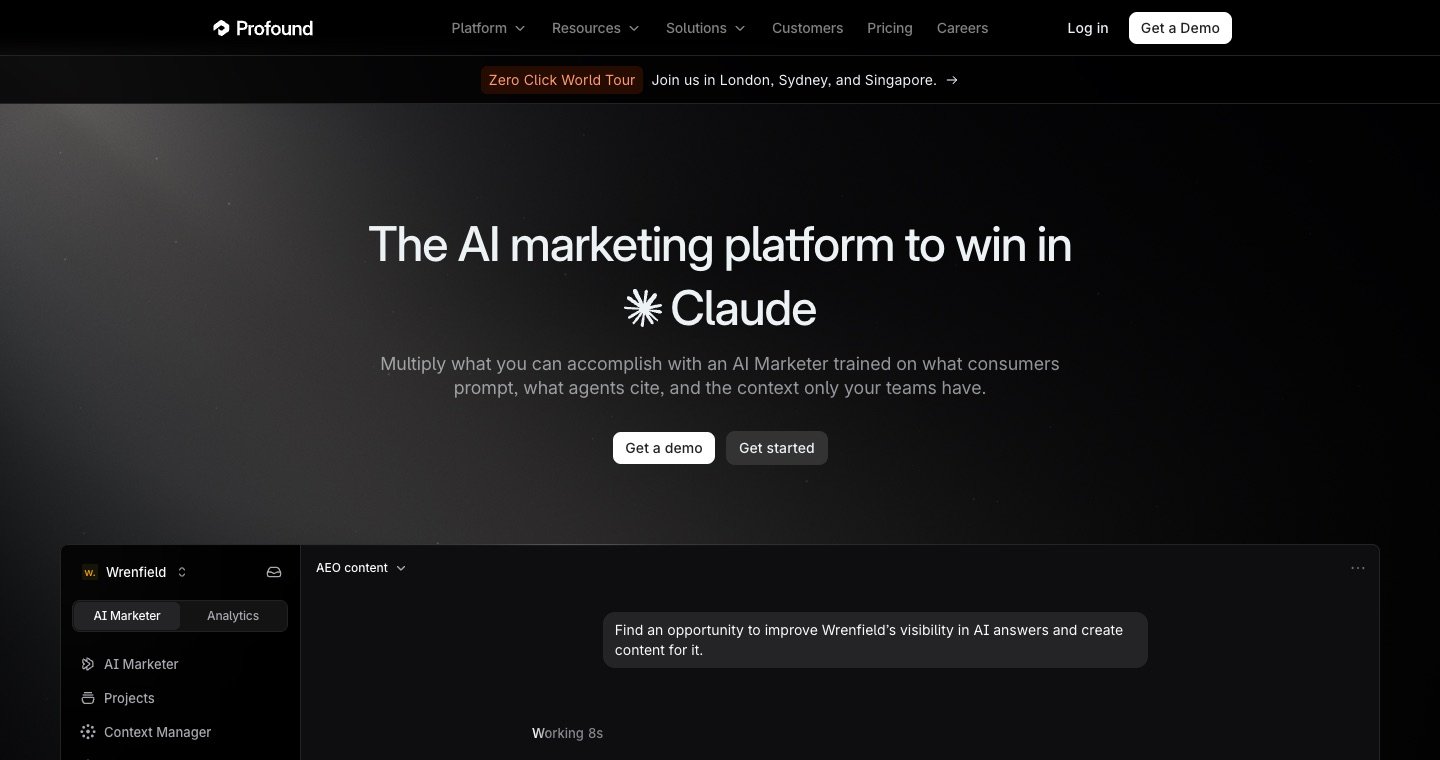
- 6. Profound: best for agencies with enterprise clients and larger budgets
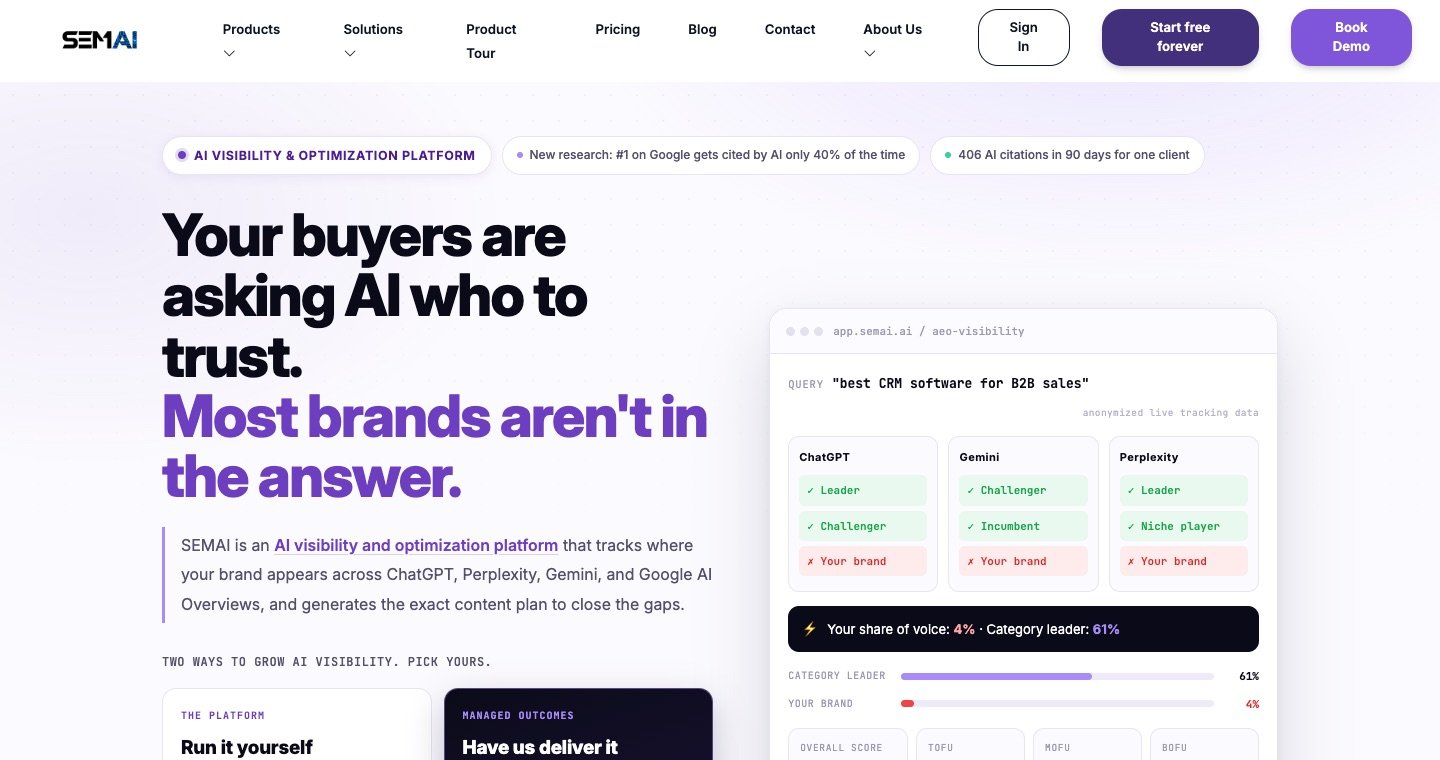
- 7. SEMAI: best for turning visibility gaps into content
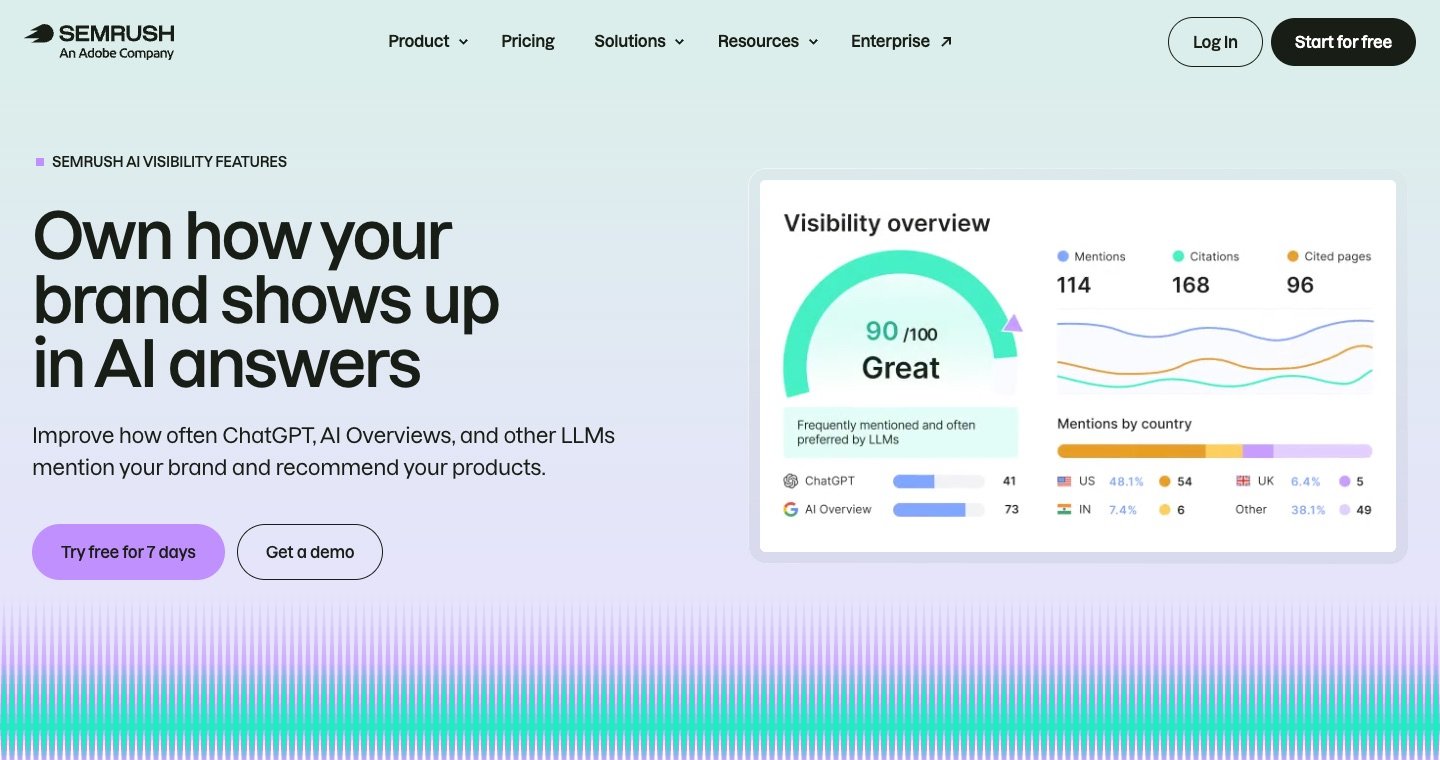
- 8. Semrush AI Visibility Toolkit: best if Semrush is already your daily tool
- How to choose: 7 questions to ask before you pay
- Costs that do not appear on the pricing page
- How agencies and freelancers can use these tools to win and keep clients
- A 7-day trial plan that works for any tool
- What should you do next?
In short: There is no single best AI visibility tool, because the right one depends on how many clients you serve, which AI surfaces their buyers use and what you can pass on in your fees. My short list for October 2026: AmasoAI for WordPress freelancers and small agencies on a tight budget, LLMrefs or Otterly.AI for cheap broad coverage, Peec AI for boutique agencies with 3 to 25 clients, Ahrefs Brand Radar or the Semrush AI Visibility Toolkit if you already live in one of those suites, SEMAI if you want gap analysis and content generation in one platform, and Profound when clients are large enough to pay for enterprise depth. Below I compare eight tools on price, engines tracked and agency features using each vendor’s own pages, then give you a decision table, a five-client cost model, the costs that do not appear on pricing pages, the questions to ask before you pay and a seven-day trial plan.
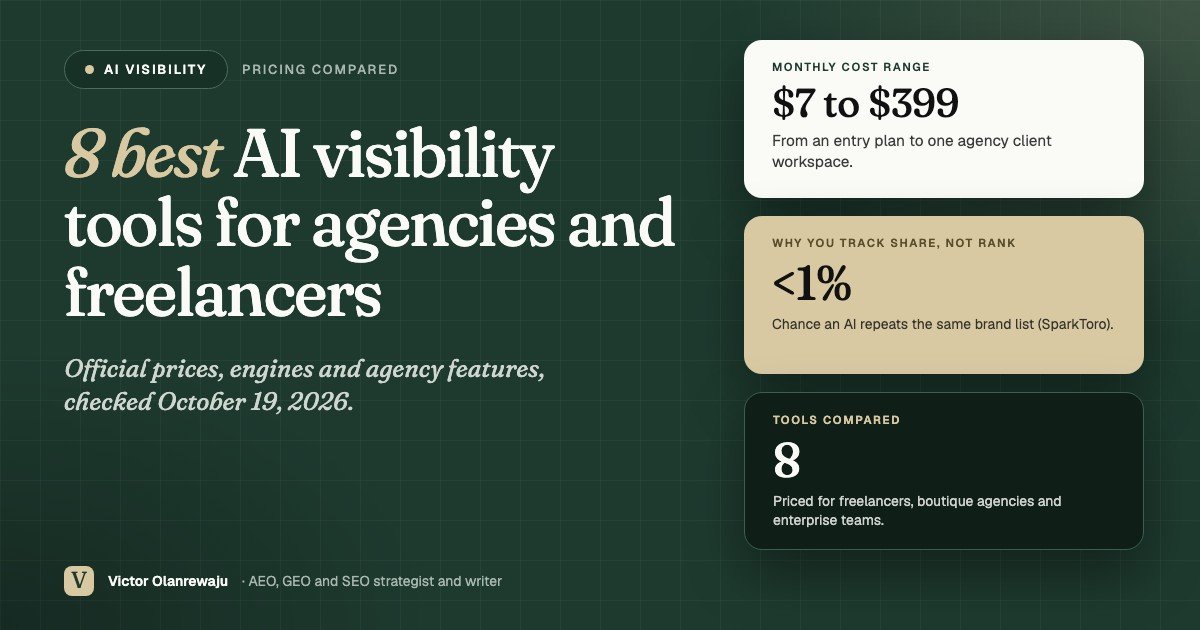
$7 to $399
monthly cost range, from AmasoAI’s Starter plan ($6.99) to one Profound client workspace
<1%
chance an AI returns the same brand list twice (SparkToro and Gumshoe.ai, 2,961 responses)
8
tools compared, each priced from its own page on October 19, 2026
2 of 8
do not publish a full agency price (Profound and SEMAI)
If you sell SEO or content to clients, you are now being asked a new question: “are we showing up in ChatGPT?” You can answer it by hand for one client with a spreadsheet and an afternoon. By client number five, you need a tool, and that is where people overspend. They buy a per-domain plan for ten clients, pay for engines their clients’ buyers do not use, or sign an annual contract before checking whether the dashboard can produce a report a client will actually read. This guide is for freelancers, consultants and agency owners who need to choose and price a tool once and get it right.
I focus on what a buyer needs to know: what each plan costs, how that cost scales as you add clients, which AI engines are covered, what the agency features are and where each tool falls short. If you want the manual method first, see how to check what ChatGPT says about your business. For the market numbers behind the demand, see AI search statistics for 2026.
What does an AI visibility tool actually do?
An AI visibility tool runs a list of buyer questions, called prompts, through AI assistants such as ChatGPT, Perplexity, Gemini, Claude and Google’s AI Overviews and AI Mode. It records whether your brand was mentioned, which pages were cited, which competitors appeared and how the answer described you. Then it turns those records into metrics: mention rate, citation rate, share of voice, sentiment and the sources that influence the answers.
Two limits matter before you spend a cent. First, AI answers are not stable. SparkToro and Gumshoe.ai ran 12 brand-recommendation prompts about 2,961 times across ChatGPT, Claude and Google’s AI. The same list of brands came back in fewer than 1% of repeated runs, and the same list in the same order in fewer than 0.1%. Their conclusion was that the percentage of responses in which a brand appears is a more reliable measure than its rank. So any tool that sells you a single “position in ChatGPT” is selling a number that moves on every run. Look for tools that report visibility across many prompts, and that run each prompt more than once.
Second, a tool measures. It does not make you more visible. Becoming the answer takes better pages, third-party mentions and technical access, which I cover in how to get cited by ChatGPT and why Google rankings do not match ChatGPT mentions. Some tools in this list add recommendations or content features, and those are useful, but the cited and recommended results still depend on the work.
The 8 AI visibility tools at a glance
These are list prices from each vendor’s own page on October 19, 2026, in US dollars. “Engines” are the AI surfaces each vendor names for its self-serve or agency plans. The tools are in alphabetical order, not ranked.
| Tool | Entry price | Engines named | Agency setup | Best for |
|---|---|---|---|---|
| Ahrefs Brand Radar | Custom prompts from $50 a month (free with paid Ahrefs plans from Lite up); AI Visibility Index from $199 a month | AI Overviews, AI Mode, ChatGPT, Gemini, Copilot, Perplexity; Claude in the Index | Part of the Ahrefs platform; no client workspaces or white-label reports listed on its page | Teams already paying for Ahrefs |
| AmasoAI | Free; Starter $6.99; Pro $14.99; Agency $49.99 a month | ChatGPT, Perplexity, Gemini, Claude (not Google AI Overviews or AI Mode) | Pro adds white-label reports and a client portal; Agency covers up to 10 sites; all inside WordPress | WordPress freelancers and small agencies on a budget |
| LLMrefs | $79 a month, listed as a limited-time price | ChatGPT, AI Overviews, AI Mode, Gemini, Perplexity, Claude, Grok, Copilot, Meta AI, DeepSeek | Unlimited projects and team members under one subscription; CSV and API | Consultants who want wide engine coverage cheaply |
| Otterly.AI | Lite $29; Standard $189; Premium $489 a month | ChatGPT, AI Overviews, Perplexity, Copilot; AI Mode, Gemini and Claude cost extra | Unlimited seats; unlimited workspaces from Standard | Single-brand freelancers (Lite) and small agencies (Standard) |
| Peec AI | Brands: $95, $245 or $495 a month. Agencies: $205, $420 or $675 a month on annual billing | Agency plans cover six: ChatGPT, Claude, Perplexity, AI Overviews, AI Mode, Gemini | Isolated client projects, free 7-day pitch projects, Looker Studio, API and MCP | Agencies with 3 to 25+ clients |
| Profound | Free 7-day trial; Enterprise custom; agency client workspaces $399 a month each | ChatGPT, Perplexity and AI Overviews on Agency Growth; up to nine on Enterprise | Agency mode, 10 pitch workspaces a month, consolidated billing | Larger agencies serving enterprise clients |
| SEMAI | Free plan; Visibility $89, Essential $199, Growth $389 a month | ChatGPT, Perplexity, Gemini, Google AI Overviews | Managed, outcome-based agency service; no client workspaces or white-label reports listed | B2B software teams that want content written for the gaps |
| Semrush AI Visibility Toolkit | $99 a month per domain; SEO + AI Search plans from $165.17 a month on annual billing | Docs name ChatGPT and Google AI Mode for prompt tracking; product page also shows AI Overviews | Priced per domain; extra domains $99 each | Teams already living in Semrush |
Which AI visibility tool should you choose? A decision table
Find your situation, then read that tool’s section for the limits before you buy.
| Your situation | Start with | Why | Watch out for |
|---|---|---|---|
| Freelancer with a handful of WordPress clients and a small budget | AmasoAI | Lowest subscription price, tracks inside the WordPress dashboard, and Pro adds white-label reports and a client portal | No Google AI Overviews or AI Mode tracking, WordPress only and you pay AI providers directly through your own API keys |
| Consultant who wants every major engine for the lowest monthly cost | LLMrefs | $79 covers 500 prompts, ten named engines and unlimited projects | Weekly refresh rather than daily and a price listed as limited-time |
| Freelancer testing paid tracking on one client | Otterly.AI Lite | $29 a month and a free trial for 15 prompts on four engines | 15 prompts is one small brand, and Gemini, Claude and AI Mode are paid add-ons |
| Boutique agency with 3 to 10 clients and monthly reporting | Peec AI Agency Growth | Isolated client projects, unlimited seats, pitch projects and Looker Studio reporting | Credits decide how many prompts you get, so test your real prompt count |
| Agency that already pays for Ahrefs | Ahrefs Brand Radar | Custom prompts are free with paid plans from Lite up, next to your keyword and backlink data | Checks are metered per platform, so cost climbs with prompts and engines |
| Agency that already pays for Semrush | Semrush AI Visibility Toolkit | One vendor, one login and an AI-readiness check in the site audit | $99 per client domain and only 25 prompts each |
| Agency with enterprise retainers and a need for agent workflows | Profound | Deeper analytics, agent workflows and dedicated support | $399 per client workspace, and the base fee is not shown on its page |
| B2B software team that wants gaps found and content written in one place | SEMAI | Finds the queries where competitors are cited, then drafts content for them | Credits meter every action, and it tracks four engines |
| Client on Shopify, Webflow or a custom stack | LLMrefs, Otterly.AI or Peec AI | None of them requires WordPress | AmasoAI will not work for these clients |
Pricing compared: the cheapest way in, and what 5 clients really cost
Entry prices are a poor guide, because a $29 plan and a $250 plan buy very different amounts of tracking. This chart shows only the lowest paid plan for each tool. Use it as a floor, not a budget.
Cheapest paid way in, per month, by tool (US dollars)
The number that matters to an agency is what you pay when you add clients. I modeled a common small-agency case: five client brands with about 20 prompts each, 100 prompts in total. Prices scale in very different ways. Semrush charges per domain, Profound per client workspace, Peec by credits, Otterly by total prompts and LLMrefs and AmasoAI by a flat plan.
Estimated monthly cost to track 5 client brands at about 20 prompts each (US dollars)
Read the chart with care. It compares what each vendor lists, not equal quality. AmasoAI and LLMrefs look cheap because they use a flat price, but AmasoAI does not cover Google’s AI surfaces and sends AI usage to your own API bill, and LLMrefs refreshes weekly. Profound’s figure excludes its base fee. Peec’s plan includes six engines, daily tracking and client reporting, which is why a higher price can still be the better value for an agency that bills clients for monthly reports.
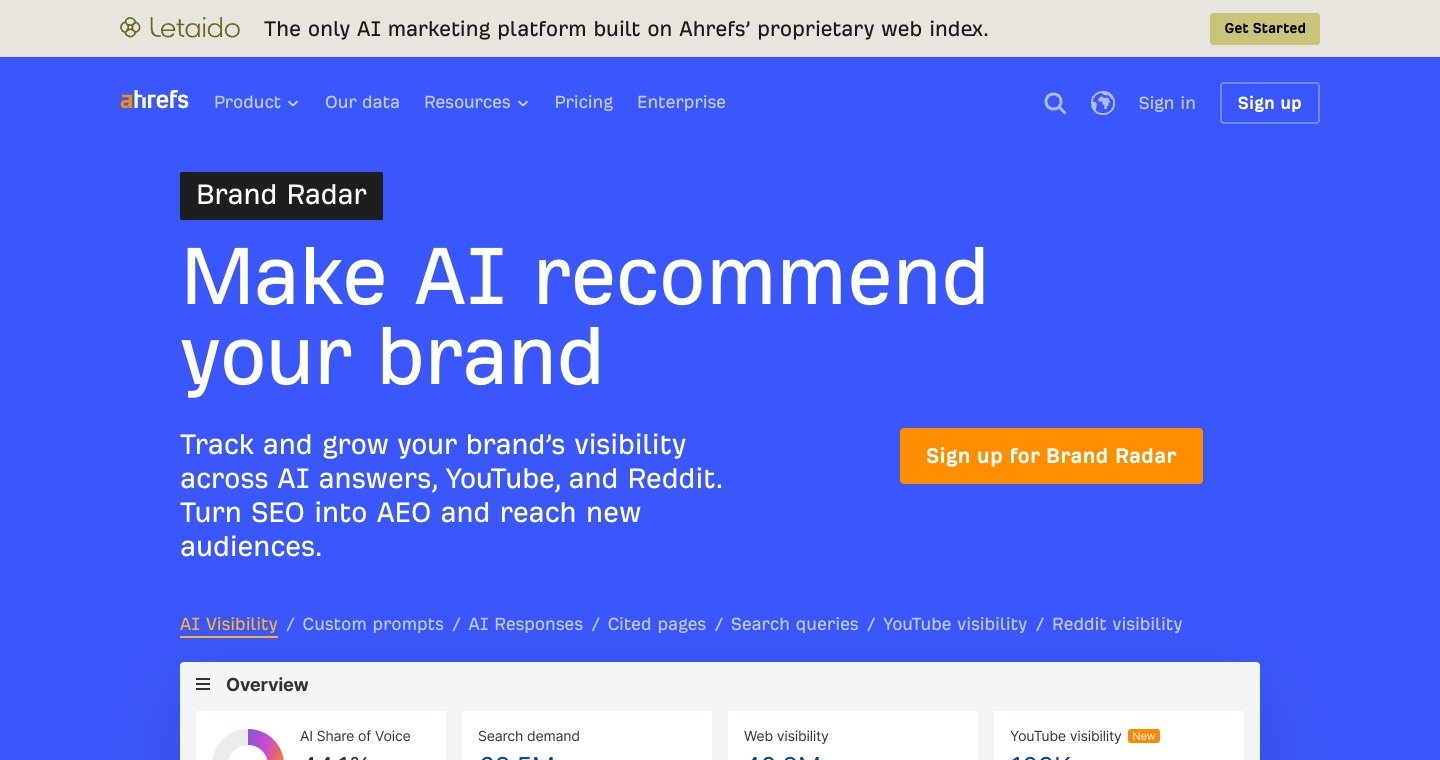
1. Ahrefs Brand Radar: best if your team already works in Ahrefs
- Best for: SEO teams that want AI visibility next to rankings and backlink data.
- Price: custom prompts from $50 a month and free with every paid Ahrefs plan from Lite up. The AI Visibility Index starts at $199 a month and is $699 a month for all models.
- Engines: AI Overviews, AI Mode, ChatGPT, Gemini, Copilot and Perplexity, with Claude available in the Index.
Brand Radar gives you two ways to track. Custom Prompts lets you enter the exact questions your buyers ask and refreshes them daily, which works even when nobody searches your brand name yet. The AI Visibility Index is a ready-made view of any brand across what Ahrefs describes as 492 million real prompts, with no setup. That second mode is handy for a pitch, because you can look at a prospect’s brand before they are a client. Ahrefs also adds YouTube, TikTok and Reddit visibility, free while in beta, and free Web Analytics and Bot Analytics for AI traffic and bot visits.
The strength is context. If you already use Ahrefs, you see AI visibility, search demand and web mentions in one place, and you can use fan-out queries, the sub-searches an AI runs behind the scenes, to spot content gaps. The weakness is metering. Ahrefs says each prompt is checked daily on every selected platform, so five prompts on one platform is 150 checks a month, and Claude uses eight checks per update. The Index includes 2,500 checks a month, with overage at $0.02 a check. That is fair for a few priority prompts and expensive for dozens of clients. Its page also lists no white-label reports or client workspaces, so check how many projects your Ahrefs plan allows before you promise a client dashboard.
Verdict: the natural choice if Ahrefs is already your base. Not the cheapest way to track many clients.
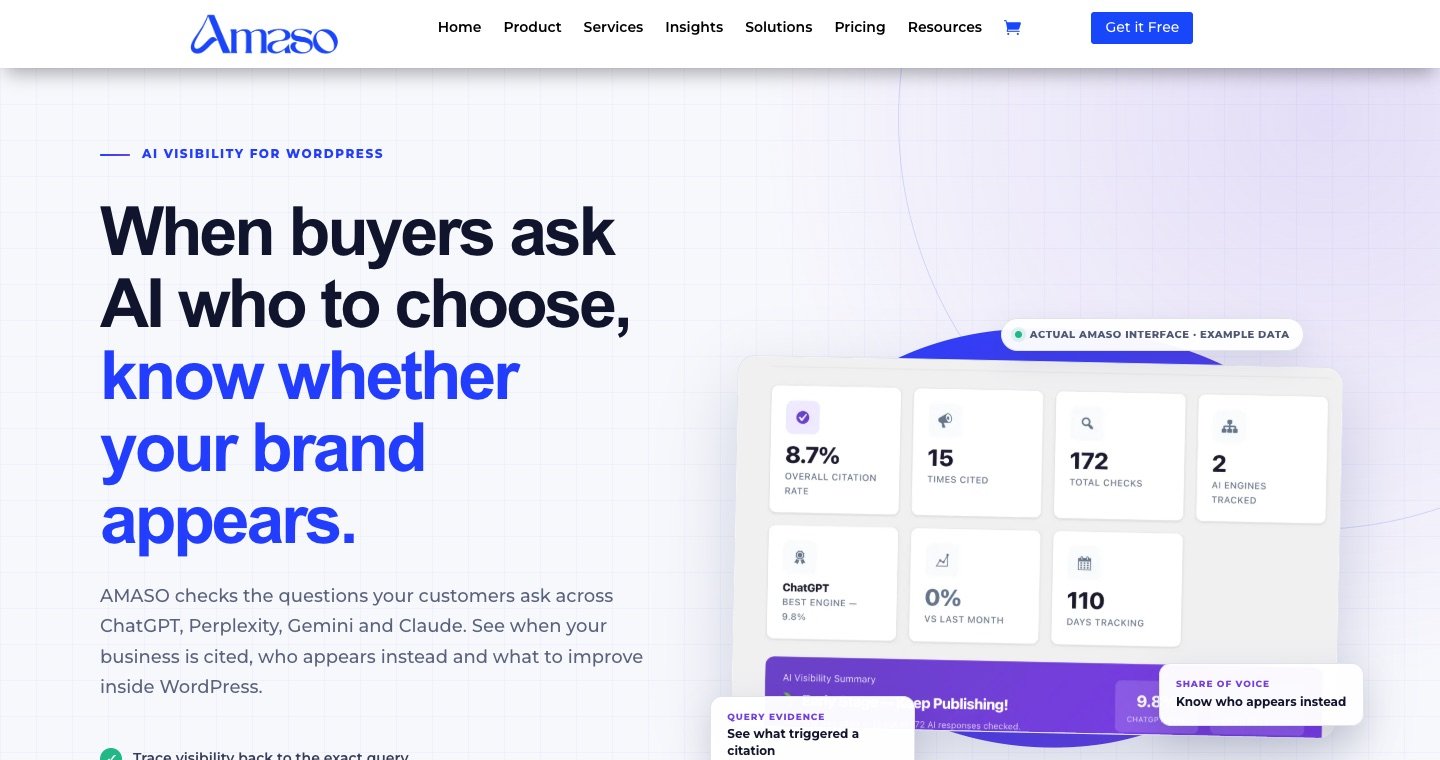
2. AmasoAI: best for WordPress freelancers and small agencies on a budget
- Best for: freelancers and small agencies whose clients run WordPress.
- Price: Free; Starter $6.99 a month; Pro $14.99 a month ($179.88 billed yearly); Agency $49.99 a month ($599.88 billed yearly). AI provider usage is billed separately through your own API keys. These are the plan prices in my review, so check AmasoAI’s pricing page for any change.
- Engines: ChatGPT, Perplexity, Gemini and Claude, plus other models through the Model Context Protocol. It does not track Google AI Overviews or AI Mode.
AmasoAI is a WordPress plugin, so tracking, evidence and fixes sit inside the site you already manage. You add the questions your customers ask, run checks across the engines and see which question triggered each citation, who appeared instead and which competing domains earn the strongest share of voice. It then gives you weekly action plans with page-level fixes and can generate JSON-LD structured data, an llms.txt file and FAQ drafts that need your approval. The Free plan gives you a first baseline, automatic JSON-LD and a generated llms.txt for one site. Starter tracks up to 25 keywords weekly with three-competitor share of voice and branded PDF reports. Pro tracks up to 100 keywords daily and adds unlimited share of voice and alerts, white-label reports with a client portal, the FAQ generator and Search Console and GA4 integration. Agency tracks unlimited keywords daily across up to 10 sites, with four GEO Autopilot runs a month, priority support and a reseller and white-label program.
The limits are real, and they count. It only works on WordPress, so a Shopify or Webflow client needs another tool. It does not cover Google AI Overviews or AI Mode, which matters if a client’s buyers mostly use Google. Because you use your own API keys, your total cost is the subscription plus what the AI providers charge, so run a trial to see your usage before you quote a client. The vendor also states plainly that it provides measurable evidence, not guaranteed rankings, citations or recommendations, and it is a younger product than Semrush or Ahrefs. For a longer look, see my AmasoAI review, and remember the disclosure at the top of this guide.
Verdict: the lowest-cost route to evidence-based tracking for WordPress clients. Pair it with manual checks of Google AI Overviews if that surface matters to the client.
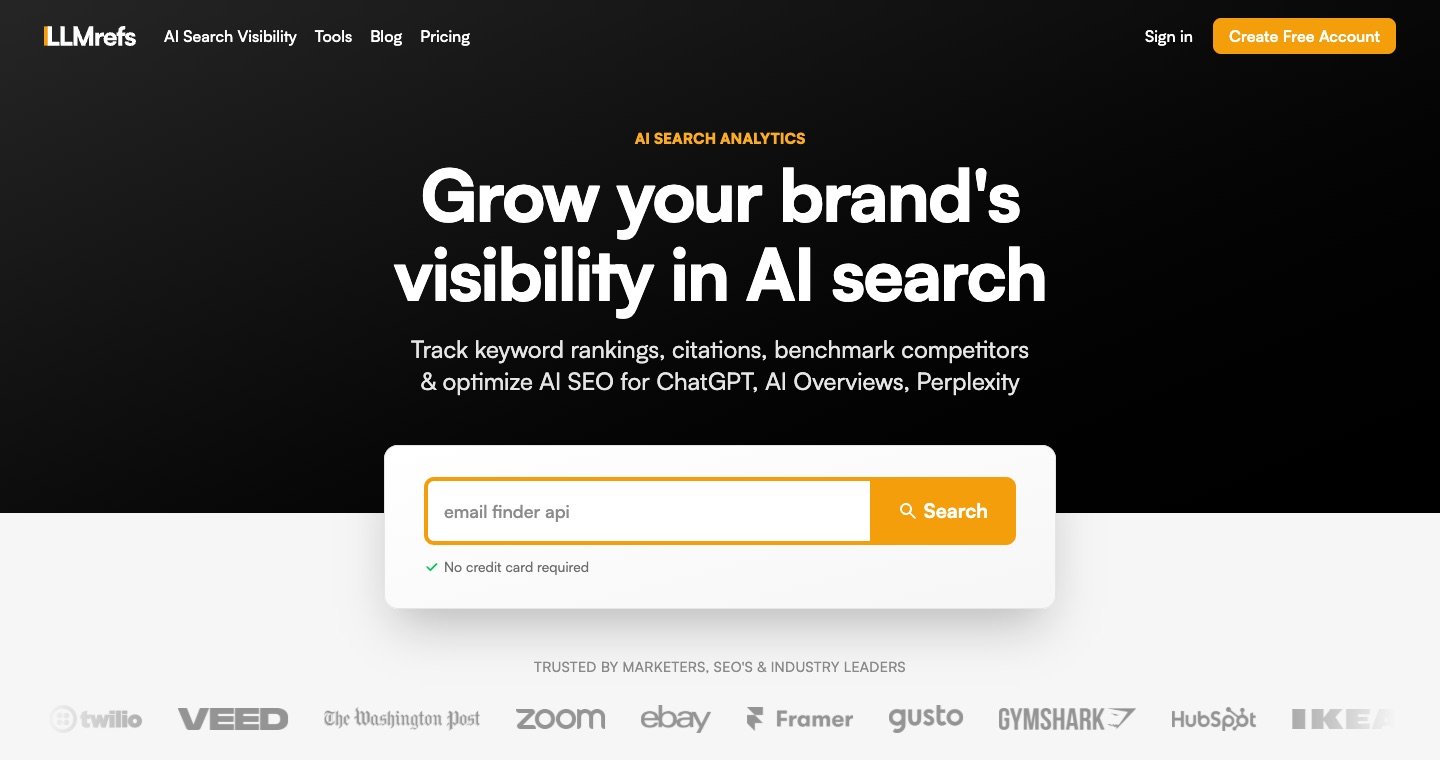
3. LLMrefs: best for broad engine coverage at a low price
- Best for: freelancers and SEO consultants who want many engines and many clients under one subscription.
- Price: $79 a month, shown as a limited-time price, with a 7-day free trial and a free account.
- Engines: ChatGPT, Google AI Overviews, AI Mode, Gemini, Perplexity, Claude, Grok, Copilot, Meta AI and DeepSeek.
LLMrefs tracks keywords, not individual prompts. You import an SEO keyword list, it generates fan-out prompts based on what it describes as real conversations, then it aggregates the responses into share of voice, position and the source URLs the engines cite. That suits an SEO who already thinks in keywords, and it keeps setup fast. The $79 plan includes 500 prompts, geo-targeting in more than 50 countries and 20 languages, monthly prompt-volume estimates, CSV export, API access, unlimited team members and unlimited projects, so you organize clients by project without paying per seat. It also bundles an AI crawlability checker, a Reddit threads finder and an llms.txt generator.
The trade-offs are cadence and control. Reports refresh weekly rather than daily, so you will see slower movement than on Peec or Otterly. Because the tool generates the prompts from your keyword, you have less say over the exact wording than on a tool where you type each prompt. And the page labels the price as limited-time, so ask what the renewal price is. It also lists no SSO or dedicated account management, which large clients sometimes require.
Verdict: the best coverage per dollar on this list for a solo consultant, provided weekly data is enough for your reporting.
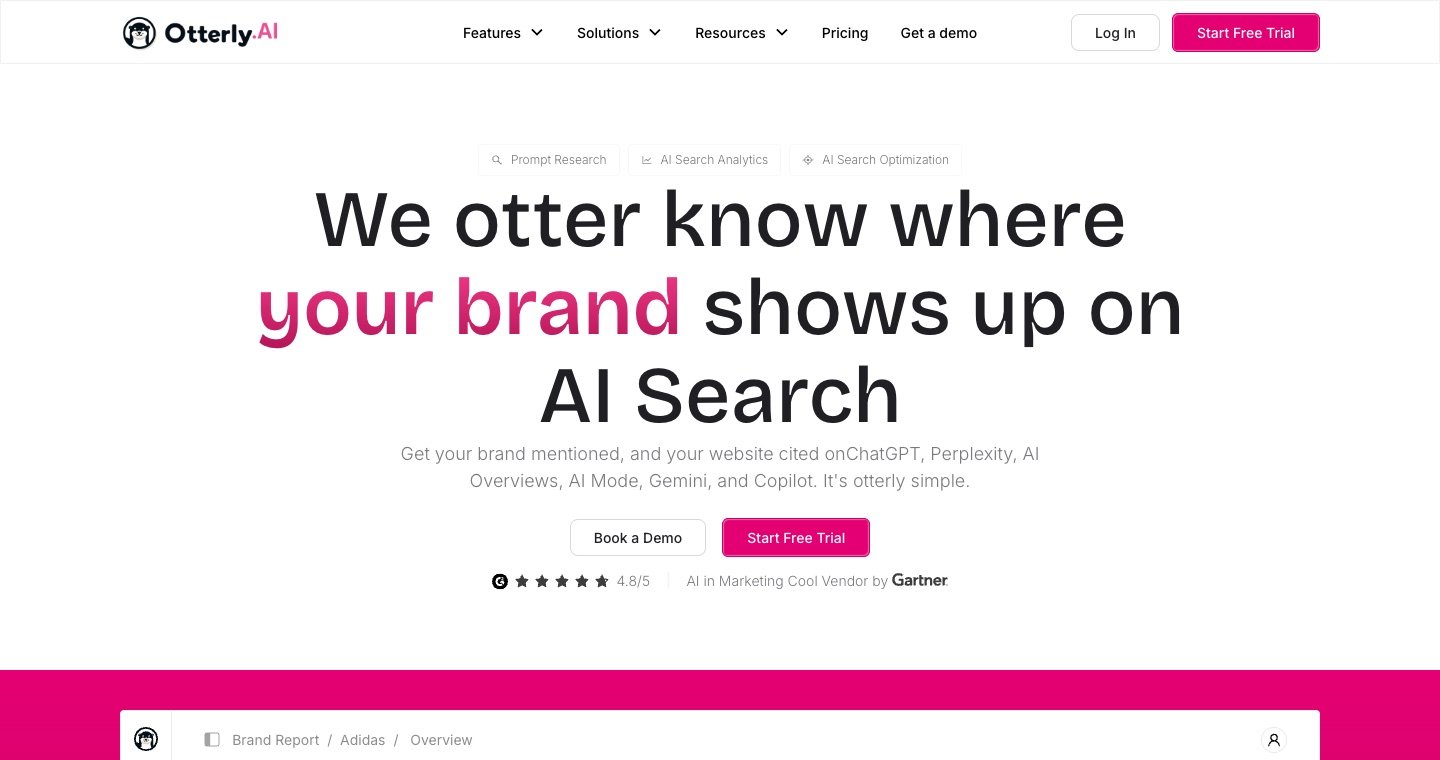
4. Otterly.AI: best low-cost entry for a single brand, with room to grow
- Best for: a freelancer testing paid tracking on one client, or a small agency with a few brands.
- Price: Lite $29 a month (15 prompts); Standard $189 (100 prompts); Premium $489 (400 prompts); Enterprise custom for 1,000+. Annual billing is 15% off, and there is a free trial.
- Engines: ChatGPT, Google AI Overviews, Perplexity and Microsoft Copilot are included. Google AI Mode, Gemini and Claude are paid add-ons.
Otterly offers prompt research, AI search analytics, a content audit for crawlability and citation potential, GEO recommendations and brand reports that track mentions, average position, share of voice and citations by region. Its site cites a 4.8 out of 5 rating on G2, a Gartner Cool Vendor in AI in Marketing recognition and more than 40,000 marketing professionals, which are the vendor’s own figures. Team seats are unlimited on every plan. Standard and Premium add unlimited workspaces, API access, MCP access and agent analytics, and tracking is daily.
The catch is how fast the price moves once you want everything. The base four engines leave out Gemini, Claude and AI Mode. Add-ons run from $9 to $149 a month for AI Mode and Gemini and from $29 to $439 for Claude, depending on your plan. Fifteen prompts on Lite is one small brand, not a multi-client setup. Standard works for roughly five small clients at about 20 prompts each, but at that point it costs more than LLMrefs and gives you fewer prompts, though it refreshes daily and has a polished reporting layer.
Verdict: an easy way to start paying for tracking on a single client, and a sensible step up to Standard once you have several small brands.
5. Peec AI: best-structured for agencies with 3 to 25+ clients
- Best for: boutique and mid-size agencies that report on AI visibility every month.
- Price (brands): Starter $95 a month (50 prompts, 1 project); Pro $245 (150 prompts, 2 projects); Advanced $495 (350 prompts, 5 projects, multi-country and Looker Studio). Each lets you choose three models and includes unlimited users.
- Price (agencies): Essential $205, Growth $420 and Scale $675 a month on annual billing. The page shows annual savings of $480, $900 and $1,440, which implies $245, $495 and $795 on monthly billing. Enterprise is custom.
- Engines: agency plans cover all six channels: ChatGPT, Claude, Perplexity, Google AI Overviews, AI Mode and Gemini.
Peec’s agency offer is the most carefully designed of the eight. Every client is an isolated project with its own prompts, competitors and channels, so you switch between clients without separate logins or mixed-up data. Every plan includes unlimited seats, the Peec MCP, API access, Looker Studio integration, CSV export and daily tracking. The agency plans also include free 7-day pitch projects that sit outside your client quota: Essential allows three active, Growth ten and Scale 25. You can run a prospect’s AI visibility before the meeting, then convert the pitch project into a client project in three clicks and keep the seven days of history as a baseline. Peec positions Growth for boutique agencies with 3 to 10 clients and Scale for 11 to 25 or more.
The product goes beyond counting mentions. It reports visibility, position and sentiment, source and citation analytics, gap analysis that shows sources naming competitors but not you, ranked recommended actions, brand-perception scoring, a crawlability audit across more than 40 AI bots and AI referral tracking. The complication is credits. How many prompts you actually get depends on the models you select and how often you track, and the page gives example configurations of 111, 277 and 722 daily prompts for Essential, Growth and Scale. That means you must test your own prompt count before committing. Brand plans include three models of your choice, and each extra model is a paid add-on, from $30 a month on Starter.
Verdict: the most agency-ready tool here. If you bill clients for monthly AI visibility reports, this is the one I would trial first.
6. Profound: best for agencies with enterprise clients and larger budgets
- Best for: larger agencies and networks whose clients expect enterprise depth and pay for it.
- Price: brands see a free 7-day trial and custom Enterprise pricing. Agency Growth lists client workspaces as a $399 a month add-on each and five extra trial workspaces for $199 a month. Agency Enterprise is custom.
- Engines: ChatGPT, Perplexity and Google AI Overviews on Agency Growth; the platform can track up to nine, including Claude, Gemini, Copilot, Google AI Mode, DeepSeek and Exa, on custom plans.
Profound’s agency pitch is a workspace model. Agency Growth includes agency mode to manage workspaces, consolidated billing, five agency seats, email support and 10 pitch workspaces a month. A pitch workspace runs for 7 days (extendable) and tracks 25 prompts so you can audit a prospect. A full client workspace tracks 100 unique prompts daily and adds 400 agent credits a month, four opportunities a week and exports in CSV and JSON. The broader platform adds an AI Marketer that works from your brand context, agents, Profound Sheets and agent analytics for AI-sourced traffic, which suits teams that want to build recurring workflows around the data.
Two cautions. The first is cost. At $399 per client, five clients is $1,995 a month before the base fee, which the pricing page does not show. Some trackers report a $99 a month base, which I could not confirm on the page. The second is stale prices: several comparison sites still quote Profound Starter at $99 and Growth at $399 for brands, yet on October 19, 2026 Profound’s own page listed only a free trial and custom Enterprise for brands. Agency Growth also has no API access and exports only for client workspaces. Ask for a written quote.
Verdict: strong for big retainers and agent-led workflows, and poor value for a freelancer or a small agency.
7. SEMAI: best for turning visibility gaps into content
- Best for: B2B software teams, and agencies that want gap analysis and content generation in one platform.
- Price: a free plan with a free AEO audit; Visibility $89 a month (200 AI credits), Essential $199 (500 credits) and Growth $389 (1,000 credits). Enterprise is custom, and annual billing is offered.
- Engines: ChatGPT, Perplexity, Gemini and Google AI Overviews.
SEMAI describes itself as an AI visibility and optimization platform. It tracks where your brand appears, finds the queries where competitors are cited and you are not, then generates content aimed at those gaps. Share of voice is reported by topic cluster, gaps are ranked by impact and tagged by funnel stage, with bottom-of-funnel queries weighted four times as heavily as top-of-funnel ones. A Content Wizard drafts blogs, FAQs and landing pages in your brand voice, with internal links and FAQ schema. It also estimates the demand behind questions asked in ChatGPT, Gemini and Perplexity, and its feature list includes Search Console insights, keyword and topic research, competitor intelligence and technical SEO checks.
Two things to weigh. First, credits meter every action: a URL visibility check costs 3 credits, an AEO audit 5, content generation 4 and the visibility planner 8, so the 200 credits on the $89 plan go quickly if you track many clients. Second, the coverage and agency tooling are narrower than the others here. It tracks four engines, with no Claude, Copilot or AI Mode, and its pricing page lists no client workspaces or white-label reports. For agencies it offers an outcome-based managed service instead, priced to agreed share-of-voice gains over a 90-day window, with no ranking guarantees. SEMAI also publishes its own research, a 60-day study of 25,540 cited URLs that reports a number one Google result was cited in AI Overviews 40.6% of the time and a number two result 15.3%. Results like that, and the 406 citations in 90 days it cites for one client, are the vendor’s own claims, so treat them as leads to check, not rules.
Verdict: a strong fit if you want one platform to find the gaps and draft the fix, especially for B2B software. Less suited to multi-client reporting, where Peec or LLMrefs scale more easily.
8. Semrush AI Visibility Toolkit: best if Semrush is already your daily tool
- Best for: teams that already run SEO in Semrush and want AI visibility reports in the same login.
- Price: the AI Visibility Toolkit is $99 a month per domain. Semrush’s SEO + AI Search plans start at $165.17 a month (Starter, $199 monthly) and $248.17 (Pro+, $299 monthly) on annual billing.
- Engines: Semrush’s help article names Google AI Mode and ChatGPT for prompt tracking and Brand Performance, and its product page also shows AI Overviews.
The Base plan gives you one project, one domain for Brand Performance analysis, 25 prompts for prompt tracking, AI search checks in Site Audit for up to 100 pages and 10 CSV exports a day. Brand Performance covers more than 40 countries, with more than 68,000 location options. Prompt Research gives 1,000 daily queries. The SEO + AI Search bundles raise the AI side to 50 prompts on Starter and 100 prompts on Pro+, alongside the SEO toolkit, with Pro+ allowing 15 websites. If a client is already in Semrush for rankings and audits, the AI data lives next to it.
For an agency the problem is scaling. Every extra domain is another $99 a month, extra prompts come in 50-prompt packs at $60 a month, and 25 prompts is tight for a business with several product lines. Five client domains is $495 a month before extras. Semrush advertises a 7-day free trial on its AI visibility page while its help article says the toolkit has none, so confirm at checkout. Also check the engine list on your plan, because third-party reviews mention Perplexity and Gemini and I could not confirm them in the official article.
Verdict: convenient for existing Semrush users and a poor-value way to add many small clients.
How to choose: 7 questions to ask before you pay
These are the checks that separate a good fit from a regretted purchase. Bring them to every trial.
| Question | Why it matters | Where the tools differ |
|---|---|---|
| 1. Which engines do your clients’ buyers use? | A tool that misses the engine your buyers use gives a false picture | AmasoAI does not track Google’s AI surfaces and SEMAI covers AI Overviews but not AI Mode; Otterly’s base plan leaves out Gemini, Claude and AI Mode |
| 2. How does the price scale with clients? | A cheap plan for one brand can become the most expensive for ten | Per domain (Semrush), per client workspace (Profound), by credits (Peec, SEMAI), by total prompts (Otterly), flat (LLMrefs, AmasoAI) |
| 3. How often does it refresh? | Daily data shows movement sooner and supports weekly client updates | Daily on Peec, Otterly and Ahrefs custom prompts; LLMrefs reports weekly |
| 4. Does it report share of voice, not just rank? | AI answers vary on every run, so share across many prompts is the stable number | Share of voice appears on Peec, LLMrefs, Otterly, Ahrefs, Semrush, SEMAI and AmasoAI; check each tool’s run count per prompt |
| 5. Can you show the evidence? | Clients trust a report that shows which question and which answer produced a result | AmasoAI shows query-level evidence; Peec and LLMrefs list cited sources |
| 6. Can you hand over a report in your brand? | Reporting is the product you sell to the client | Looker Studio on Peec; white-label reports and a client portal on AmasoAI Pro and above; confirm the rest in a trial |
| 7. Can you take your data with you? | You should be able to leave without losing the baseline | CSV and API on LLMrefs and Peec; Profound Agency Growth exports client workspaces only and has no API |
Costs that do not appear on the pricing page
- Engine add-ons. Otterly charges extra for AI Mode, Gemini and Claude, and Peec sells extra models on brand plans as add-ons, from $30 a month for one more model on Starter.
- Your own AI bill. AmasoAI uses your own API keys, so provider usage is separate from the subscription.
- Per-domain and per-prompt scaling. Semrush adds $99 per domain and $60 per extra 50 prompts. Profound adds $399 per client workspace and $199 for five more trial workspaces.
- Metered checks. Ahrefs counts a check per prompt, per platform, per day and bills overage at $0.02 a check.
- Credits. Peec’s prompt capacity depends on models and frequency, and SEMAI meters each action in credits, so the headline numbers are only examples.
- Annual commitments and renewals. Several vendors discount annual billing, and LLMrefs labels its price limited-time. Ask what the second-year price is.
- Your time. Building and maintaining a good prompt list for each client takes hours, and it is the part that decides whether the data is useful.
How agencies and freelancers can use these tools to win and keep clients
A tool earns its fee only if it becomes part of how you sell and deliver. This is the workflow I would run with any of the eight.
- Pitch with a prospect audit. Before the call, run 10 buyer questions through the engines and note where competitors are named and your prospect is not. Peec and Profound include pitch workspaces, SEMAI offers a free AEO audit, LLMrefs has a free account and Ahrefs’ AI Visibility Index reads any brand with no setup.
- Baseline in week one. Build a prompt panel of about 20 to 30 buyer questions for a small business, and 50 or more for a software company with several products. That is my rule of thumb, not a vendor figure. Record mention rate, citation rate, the sources cited and whether the facts stated are correct. My B2B SaaS playbook includes a 12-prompt panel you can copy.
- Fix what the data shows. If a page ranks on Google but the AI names a competitor, rewrite that page first. The diagnosis is in the rankings versus mentions guide. Check crawler access using the AI crawlers and robots.txt guide, and structured data using schema markup for AEO and GEO.
- Report five numbers monthly. Mention rate, citation rate, share of voice against the top three competitors, the sources that name competitors but not the client, and AI-referred sessions from analytics. Add what you shipped and what you will test next. Do not promise a position, because the research shows positions are unstable.
- Price the work, not the dashboard. The tool is a small cost next to the retainer. Charge for the audit, the fixes and the monthly analysis, and treat the subscription as a cost of delivery. If you pass the cost through, show it separately.
Measurement without improvement is only a bill. The measured gains I have published came from fixing and publishing content, not from the dashboard: see LAGE Lightings’ move from seventh to first in ChatGPT and Lens & Co’s first-place ChatGPT result. For the difference between being cited and being recommended, see AI citation versus AI recommendation.
A 7-day trial plan that works for any tool
| Day | What to do | What you learn |
|---|---|---|
| 1 | Build one 20-prompt panel for a real client, with brand and non-brand questions | How quickly you can set up and how well the tool handles prompts |
| 2 | Run the same 20 prompts by hand in ChatGPT, Gemini and Perplexity | Your ground truth for comparison |
| 3 | Compare the tool’s mention rate and cited sources with your manual results | Whether the tool’s numbers are believable |
| 4 | Rerun the tool and compare with day 3 | How much the results move between runs |
| 5 | Export the data as CSV or through the API | Whether you can leave with your data |
| 6 | Produce a one-page client report from the tool | Whether a client could understand it without you |
| 7 | Work out the cost for all your clients, including add-ons | The real monthly bill and whether the margin works |
If a tool fails on day 3 or day 5, do not buy it, whatever the price. For the manual method on days 1 and 2, use my guide to checking what ChatGPT says about your business.
What should you do next?
Pick two tools from the decision table, run the seven-day trial on the same real client and choose on evidence, not on the price alone. If you would rather see where AI assistants stand on your business or a client’s before you spend anything, I run this check as part of a free AI visibility audit. See the pricing page, my pages on AEO and GEO work, or tell me what you want to be found for. For the wider strategy, read SEO, AEO and GEO explained, and if you need writing that can earn citations, see who can write content that gets cited by ChatGPT, Gemini and Perplexity.
Prices and features were read from each vendor’s own pages on October 19, 2026. Screenshots are of the vendors’ homepages on that date and show the vendors’ own example data.
Keep reading: For software buyers, I ran ten “best software” questions through ChatGPT in how SaaS products get named in ChatGPT’s best-software answers. For a security buyer’s version of this, I tested ten vendor questions in how AI recommends cybersecurity vendors. For regulated finance brands, see why NerdWallet gets cited instead of your fintech.
Frequently asked questions
What is the best AI visibility tool for agencies?
For boutique agencies with 3 to 25 clients, Peec AI’s agency plans are the most agency-ready of the eight: isolated client projects, unlimited seats, free pitch projects and Looker Studio reporting. LLMrefs is the cheapest for broad coverage, and Profound suits enterprise clients. There is no single winner for every agency.
What is the cheapest AI visibility tool?
AmasoAI has the lowest subscription, with a free plan and Starter at $6.99 a month, plus your own AI API usage. Among tools with usage included, Otterly.AI Lite is $29 a month for 15 prompts and LLMrefs is $79 a month for 500 prompts.
What is the best AI visibility tool for freelancers?
If your clients use WordPress, AmasoAI keeps the cost very low. For any platform, LLMrefs gives wide engine coverage and unlimited projects at $79 a month, and Otterly.AI Lite at $29 is a cheap way to test paid tracking on one client.
How much do AI visibility tools cost in 2026?
From $6.99 a month for AmasoAI Starter and $29 for Otterly.AI Lite to $389 for SEMAI Growth, and $399 a month for each Profound client workspace. Agency plans on Peec AI run from $205 to $675 a month on annual billing. Prices change often, so check each vendor’s page.
Do I need a tool, or can I check AI answers manually?
You can check manually for one or two clients. Beyond that, repeating the same prompts across several engines each week takes too long and gives no history. Use a spreadsheet for your first client, then buy a tool when manual checking stops being practical.
Which AI engines should a tool cover?
At least ChatGPT, Google AI Overviews and AI Mode, Perplexity and Gemini, and Copilot or Claude if your clients’ buyers use them. Ask your client’s customers which assistants they use, and weight coverage to that answer.
Are rankings in AI answers reliable?
Not on their own. SparkToro and Gumshoe.ai found the same brand list in fewer than 1% of repeated runs. Visibility measured across many prompts is steadier than a single position, so choose tools that report share and mention rate.
Does AmasoAI track Google AI Overviews?
No. AmasoAI tracks ChatGPT, Perplexity, Gemini and Claude and does not track Google AI Overviews or AI Mode. If a client depends on Google’s AI surfaces, pair it with manual checks or another tool.
Can I white-label the reports?
Some tools support it. AmasoAI’s Pro plan and above include white-label reports and a client portal, and Peec supports Looker Studio dashboards you can brand. Confirm the exact reporting options during a trial, because pricing pages rarely spell them out.
How many prompts should I track per client?
As a rule of thumb from my own practice, 20 to 30 buyer questions for a small local or e-commerce business, and 50 or more for a software company with several products. More prompts give steadier numbers but raise the price on credit and per-prompt plans.
Will a tool improve my clients’ AI visibility?
No. A tool measures what AI engines say. Improvement comes from better pages, third-party mentions and technical access. Use the data to decide what to fix, then re-test.
Why do other comparison sites show different prices?
Vendors change plans often. Profound, Semrush and AmasoAI are examples where pages and third-party sites disagree. I used each vendor’s own page on October 19, 2026, and you should check the live page before you pay.
What is SEMAI and how much does it cost?
SEMAI is an AI visibility and optimization platform that tracks brand mentions in ChatGPT, Perplexity, Gemini and Google AI Overviews, finds the queries where competitors are cited, and generates content for the gaps. It has a free plan, then Visibility at $89 a month, Essential at $199 and Growth at $389, billed by AI credits, plus a custom Enterprise plan.
Which AI visibility tool also writes the content?
SEMAI generates blogs, FAQs and landing pages for the gaps it finds, AmasoAI drafts FAQs, JSON-LD and llms.txt files for you to review inside WordPress, and Profound includes an AI Marketer that works from your brand context. Always have a human check the facts before publishing.