In this article
- The short answer: 5 price levels
- Why the same service costs $10 or $50,000
- What 6 price guides say, and who wrote them
- What AI tracking tools cost: 6 pricing pages, read November 5, 2026
- What agencies publish, and what they leave out
- What my own work costs
- Where the money should go
- A 6-month budget for 3 paths
- The break-even math
- 6 costs nobody puts in the quote
- 10 questions to ask before you pay
- Which path fits you
- How long before you can judge it
- Where I come in
- How I checked, and the limits

In short: AI search optimization costs anywhere from $0 to $50,000 a month because the name covers 3 different jobs. Tracking tools cost $29 to $495 a month. One-time fixes cost $390 to $1,590 from me and $1,000 to $7,500 for agency audits. Managed monthly programs run from $290 to $10,000 or more. For a small business, a build plus a light retainer comes to about $2,590 over 6 months. Spend most of it on getting listed, reviewed and mentioned on other sites, and skip tricks made only for AI. Nobody can guarantee a citation, so judge any program after 3 months, not 3 weeks.
$29
Cheapest posted tracker plan a month. The dearest self-serve plan I found is $495
5,000x
Gap between the low and high GEO prices in one guide: $10 to $50,000
$2,590
A 6-month build-plus-retainer budget I priced
3 sales
Break-even on that budget if each new customer is worth $1,000 in gross profit
One price guide says generative engine optimization can cost “anywhere from $10 to $50,000.” That is not a price range. It is a 5,000-fold shrug.
You cannot budget against a shrug. So I did what a careful buyer would do. I read 6 price guides and opened 7 vendor pricing pages. I took a screenshot of each page, wrote down every number and checked who wrote it.
Here is what I learned. The guides disagree because “AI search optimization” is 3 different jobs sold under one name. One job costs $0 to $495 a month. One costs a few hundred to a few thousand dollars, once. The third never ends, and it moves your name more than the other two. Most quotes never say which job you are buying.
This article prices all 3. You get verified tool prices, the prices agencies publish, my own price list and a 6-month budget for 3 paths. You also get the break-even math and 10 questions to ask before you sign anything.
One warning first. Nobody can promise a citation or a ranking. Google says so itself: no one can guarantee a #1 ranking. So price a program as work you buy, not as a result you buy.
The short answer: 5 price levels
Start here if you only have a minute. These are the 5 levels I found, with the prices I could verify.
| Level | What you get | Published price | Fits |
|---|---|---|---|
| 1. DIY by hand | 10 buyer questions run each month in ChatGPT, Perplexity and Google, plus fixes to your own pages and profiles | $0 in cash, about 43 hours over 6 months (my estimate) | Owners with time and one location |
| 2. DIY plus a tracker | The same, plus daily tracking of 15 to 350 questions | $29 to $495 a month: Otterly.AI, Peec AI, HubSpot AEO ($50), Semrush ($99) | Anyone who must report to a boss or client |
| 3. One-time build | An audit plus fixes: pages, schema, profiles, indexing | $390 to $1,590 from me. Agency audits: $1,000 to $5,000 (Stackmatix) and $1,500 to $7,500 (310 Creative) | Sites with known gaps |
| 4. Light monthly program | Articles, reviews, listings, outreach and a monthly report | $290 to $1,250 from me. AEO Engine: $1,597 to $2,997. WebFX: from $3,000 | Small and mid-size businesses |
| 5. Enterprise program | A senior team, many markets, digital PR | $5,000 to $25,000 in guides. AEO Engine: from $10,000 | Large brands |
The levels overlap on purpose. A $390 build and a $1,597 retainer can both be right. The real question is which job you need done.
Why the same service costs $10 or $50,000
Because it is three services. Each has its own price, its own worker and its own proof.

Job 1: measure. You ask buyer questions in ChatGPT, Perplexity and Google and log who gets named. By hand, that takes about 30 minutes. A tracker automates it. Either way, measuring shows the gap. It does not close it.
Job 2: fix your own site and profiles. You write a page for each buying question, match your name, address and services across your profiles, and check indexing and basic tags. Here is the catch. Google says optimizing for generative AI search is still SEO and that you do not need new machine readable files or special markup. So job 2 overlaps with ordinary SEO work. If you already pay for SEO, ask what is new.

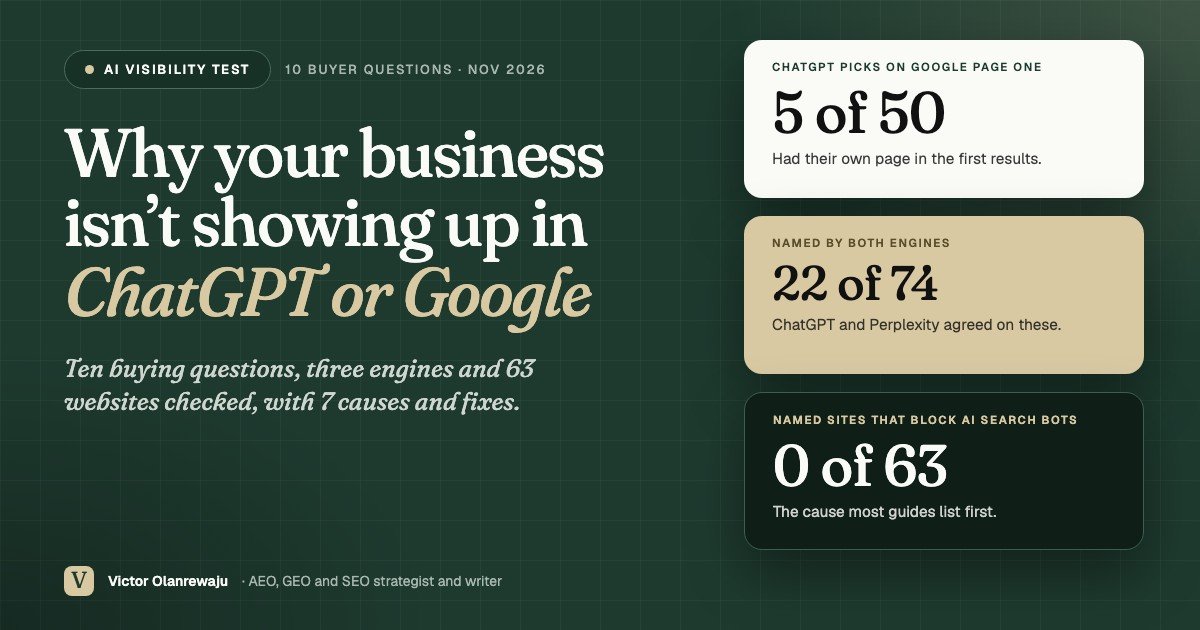
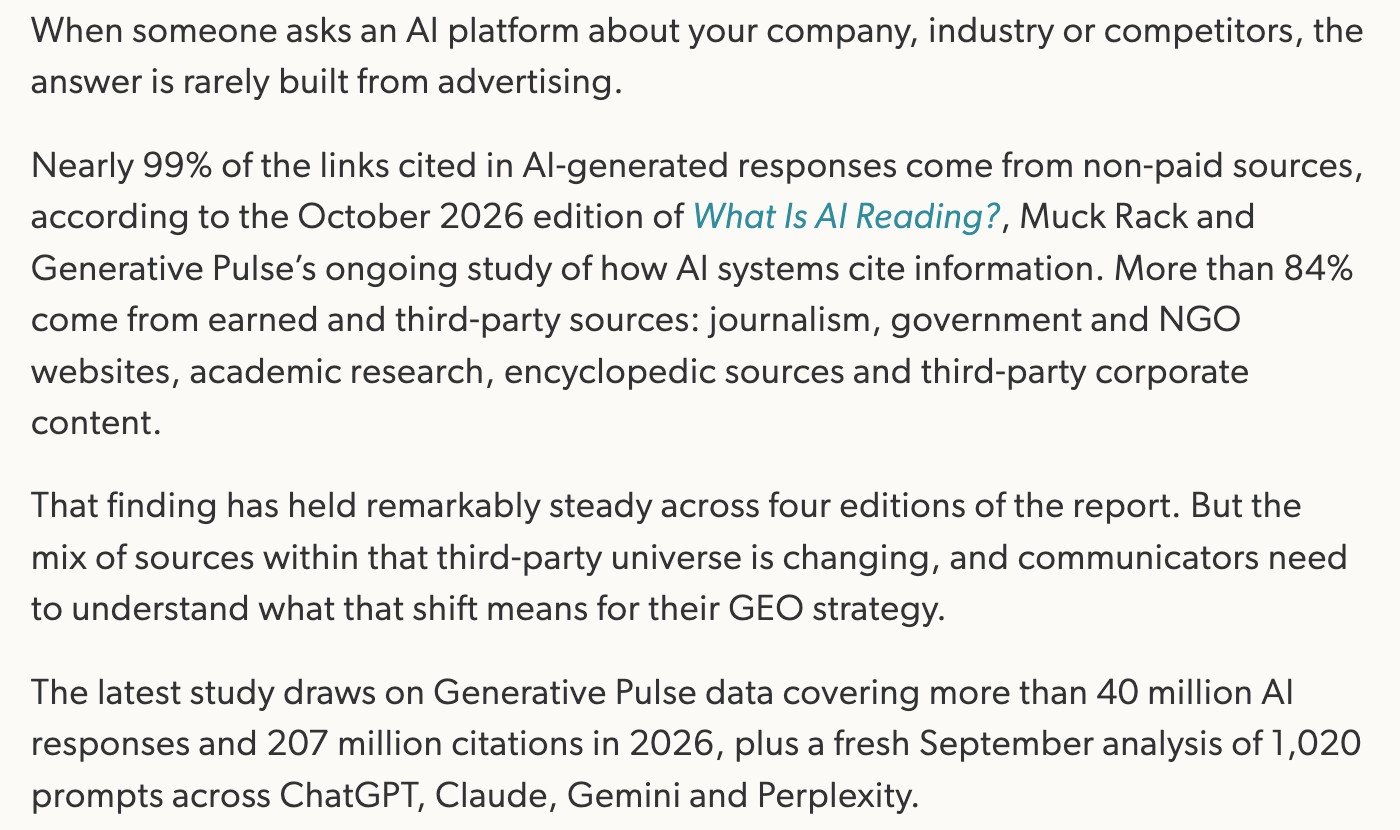
Job 3: earn mentions. You get reviewed, listed and named on the sites AI engines read. This is the long job, and the evidence points here. In my November 5 test, only 5 of the 50 businesses ChatGPT named had their own page on Google page one. Meanwhile Muck Rack’s October 2026 report found that earned and third-party sources made up more than 84% of AI citations, owned media 15.2% and paid content 0.3%. (Muck Rack sells a tool in this space, and “earned” covers journalism, government, academic and encyclopedic sources too.) The two datasets differ, but they point the same way. Other sites’ opinions shape the shortlist.
That is why quotes differ. A $29 tracker covers job 1. A $390 build covers job 2 for a small site. A $10,000 program pays a team to run job 3 across many markets. Before you compare two quotes, ask which jobs each one covers.
What 6 price guides say, and who wrote them
Most buyers start with a price guide. So I read 6, all published or updated in 2026. Then I checked who wrote each one.
| Guide | Who wrote it | Agency, per month | Audit or project |
|---|---|---|---|
| WebFX | Agency that sells GEO from $3,000 a month. Oct 15, 2026 | $1,500 to $50,000+ | Projects $5,000 to $50,000 |
| Nutshell | CRM software vendor. Updated Sep 28, 2026 | $1,500 to $50,000 | Projects $5,000 to $50,000 |
| HubSpot | Software vendor with a $50 AEO tool. Updated Sep 8, 2026 | Ongoing programs $9,000 to $15,000+ | Audit or sprint from about $3,000 |
| Stackmatix | Agency that sells AEO. Mar 12, 2026 | $1,500 to $20,000+ in 3 tiers | Audit $1,000 to $5,000 |
| 310 Creative | SEO agency. Updated Nov 2026 | $2,000 to $10,000 flat; tiers up to $50,000+ | Audit $1,500 to $7,500 |
| upGrowth (India) | Agency that sells GEO. Apr 20, 2026 | ₹75,000 to ₹3,50,000 (mid-market) | Audit ₹1,50,000 to ₹8,00,000 |
Five things stood out.
- Two guides match to the dollar. WebFX and Nutshell both list $1,500 to $50,000 a month for agencies, $5,000 to $50,000 a project, $50 to $300 an hour and $10 to $250 a month for tools. I cannot tell which came first, or whether both took the numbers from a third source.
- The floor agrees. Four of the 6 guides put the monthly floor between $1,000 and $2,000.
- The ceiling does not. It runs from $10,000 to $50,000 and up.
- Sellers wrote most of them. At least 4 of the 6 sell AI search services or tools: WebFX, Stackmatix, upGrowth and HubSpot.
- The method is thin. WebFX does not say how it got its numbers. Nutshell says it used public provider pricing and industry research, and it calls its ranges “planning estimates.”
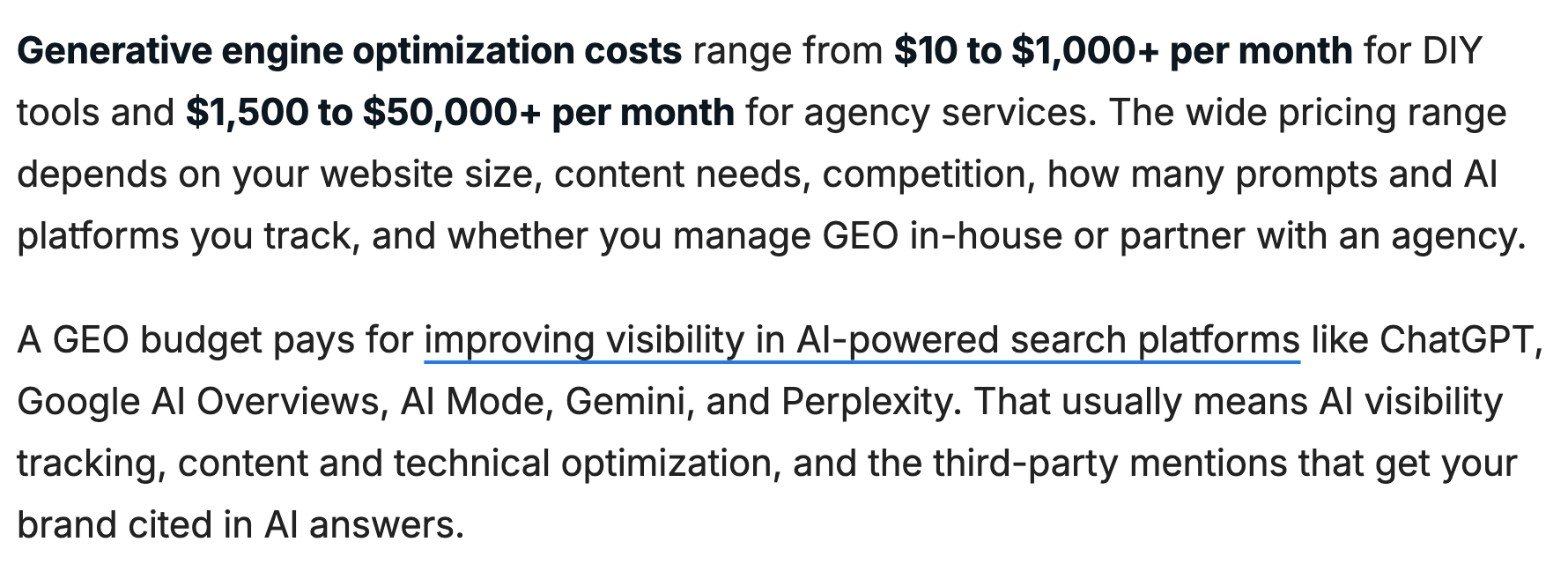
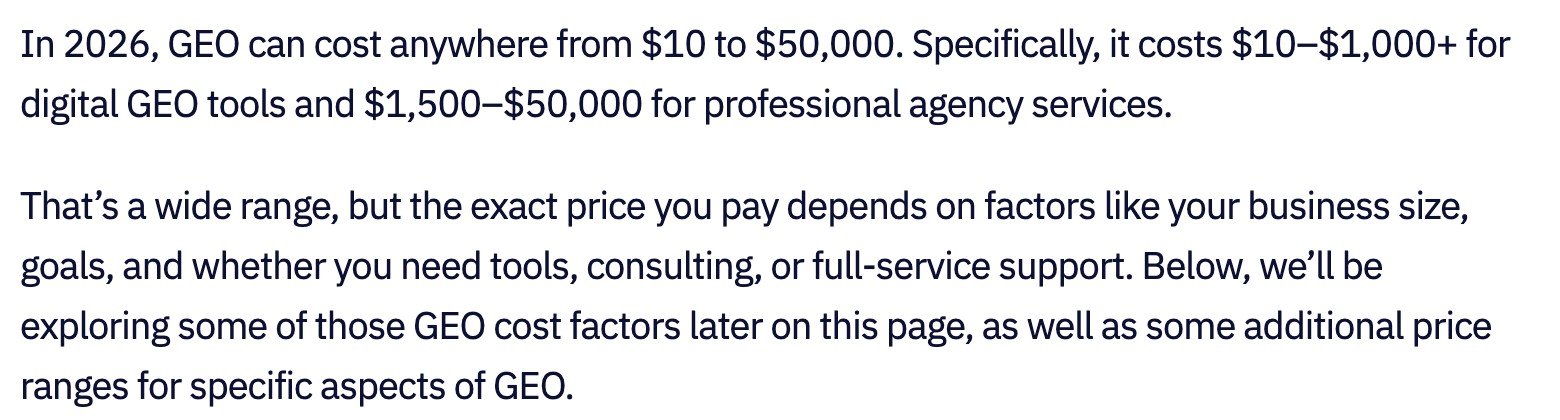
So use the guides to size an order of magnitude. Do not use them to judge a quote. Even HubSpot’s guide says the spread comes from scope, not from markup.
What AI tracking tools cost: 6 pricing pages, read November 5, 2026
Trackers do job 1. They run your buyer questions on a schedule and log whether you are named. I opened 6 vendor pages in a browser and saved a screenshot of each. Here are the prices.
| Tool | Monthly price | Prompts | What to watch |
|---|---|---|---|
| HubSpot AEO | $50 ($45 if paid annually) | 25 | ChatGPT, Gemini and Perplexity. Each extra brand costs another $50. |
| Otterly.AI | $29, $189 or $489 | 15, 100 or 400 | 4 engines. Claude, Google AI Mode and Gemini cost extra. Annual billing saves 15%. |
| Peec AI | $95, $245 or $495 | 50, 150 or 350 | 3 active models, daily tracking, unlimited users. Extra models start at $30. |
| Semrush AI Visibility | $99 | 25 | No free trial. Extra domains and users cost $99 each. Extra 50 prompts cost $60. |
| Ahrefs Brand Radar | Prompt tracking from $50. AI Visibility Index from $199 | Not stated | Prompt tracking is free with a paid Ahrefs plan from Lite up. The page shows “starts at” prices only. |
| Profound | No price posted | 50 in a 7-day trial | Enterprise is “Custom.” You must book a demo to get a number. |
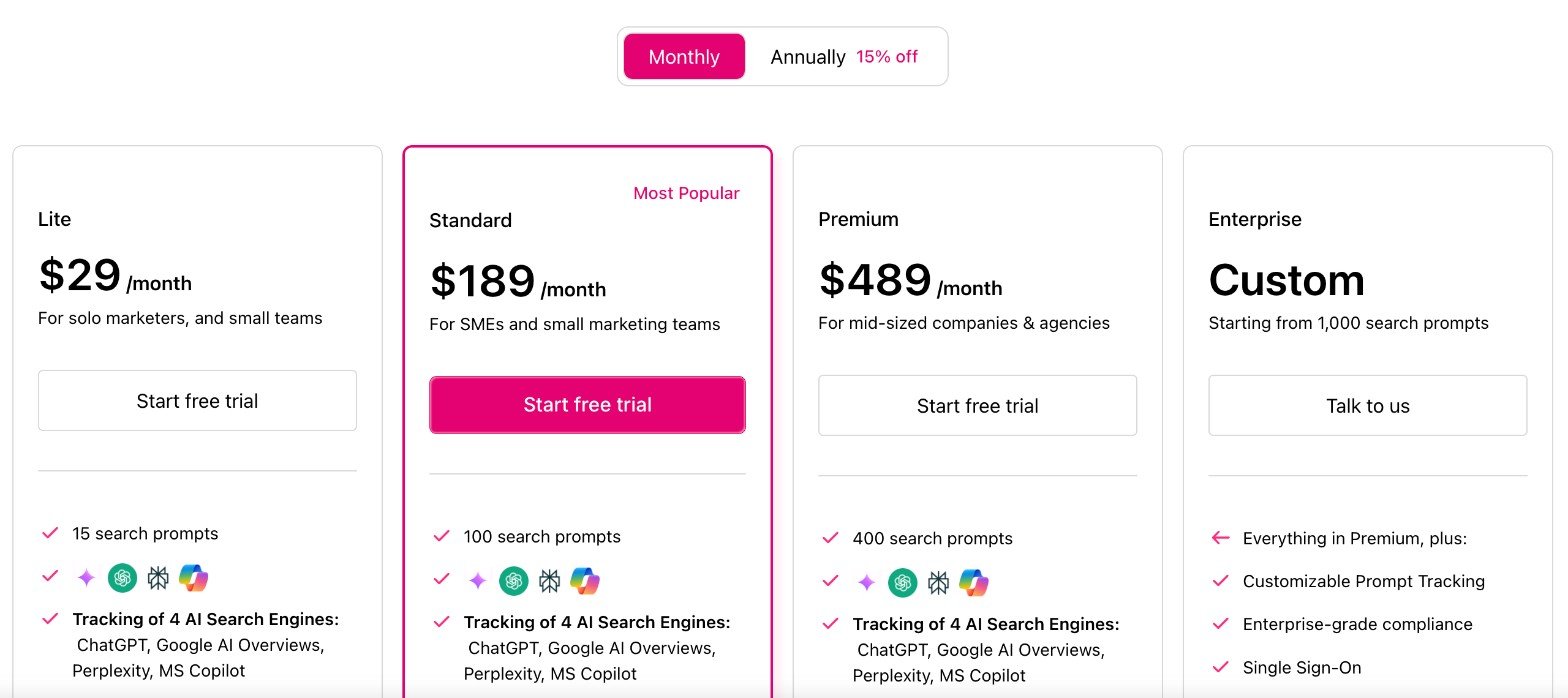
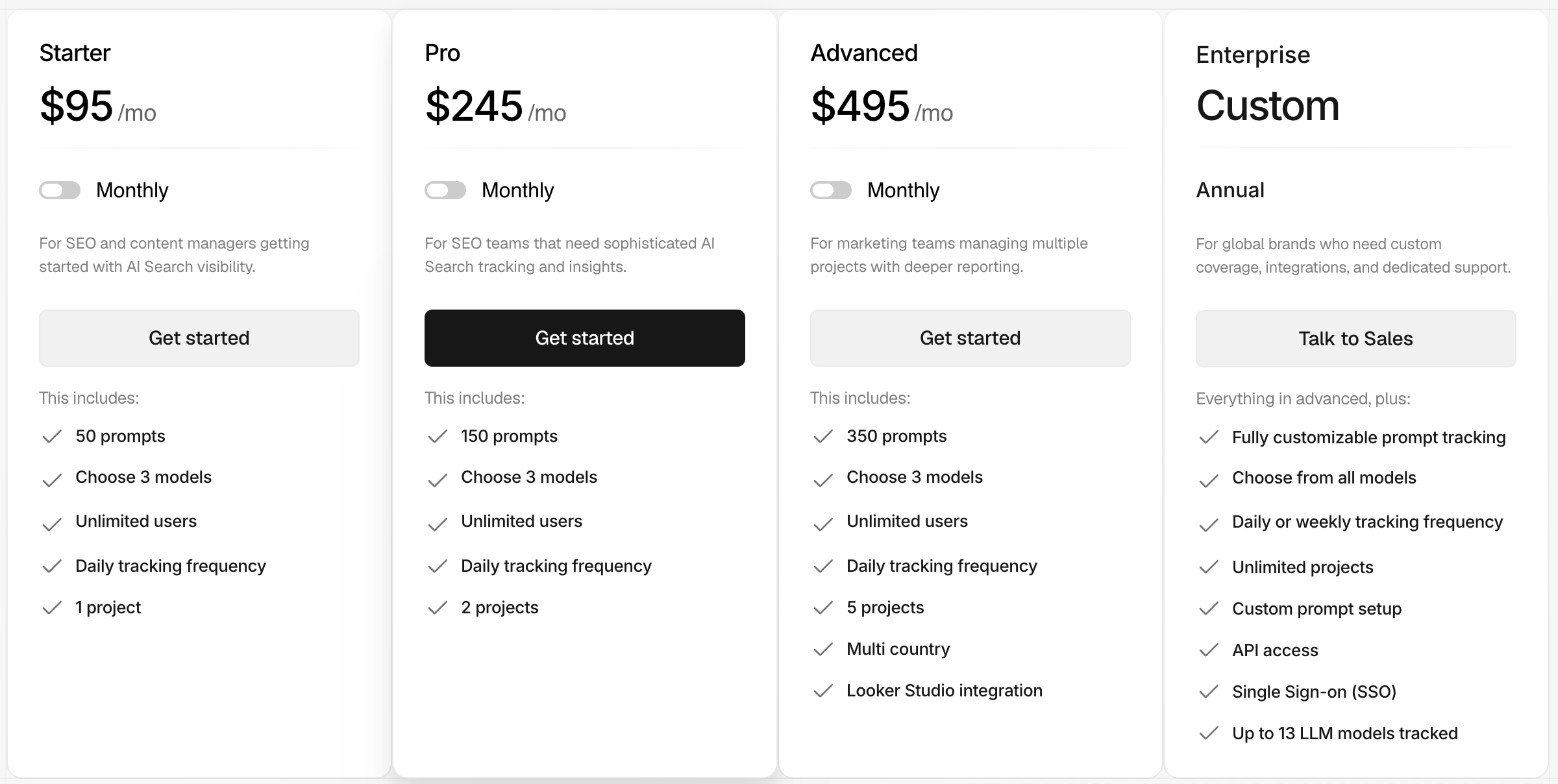
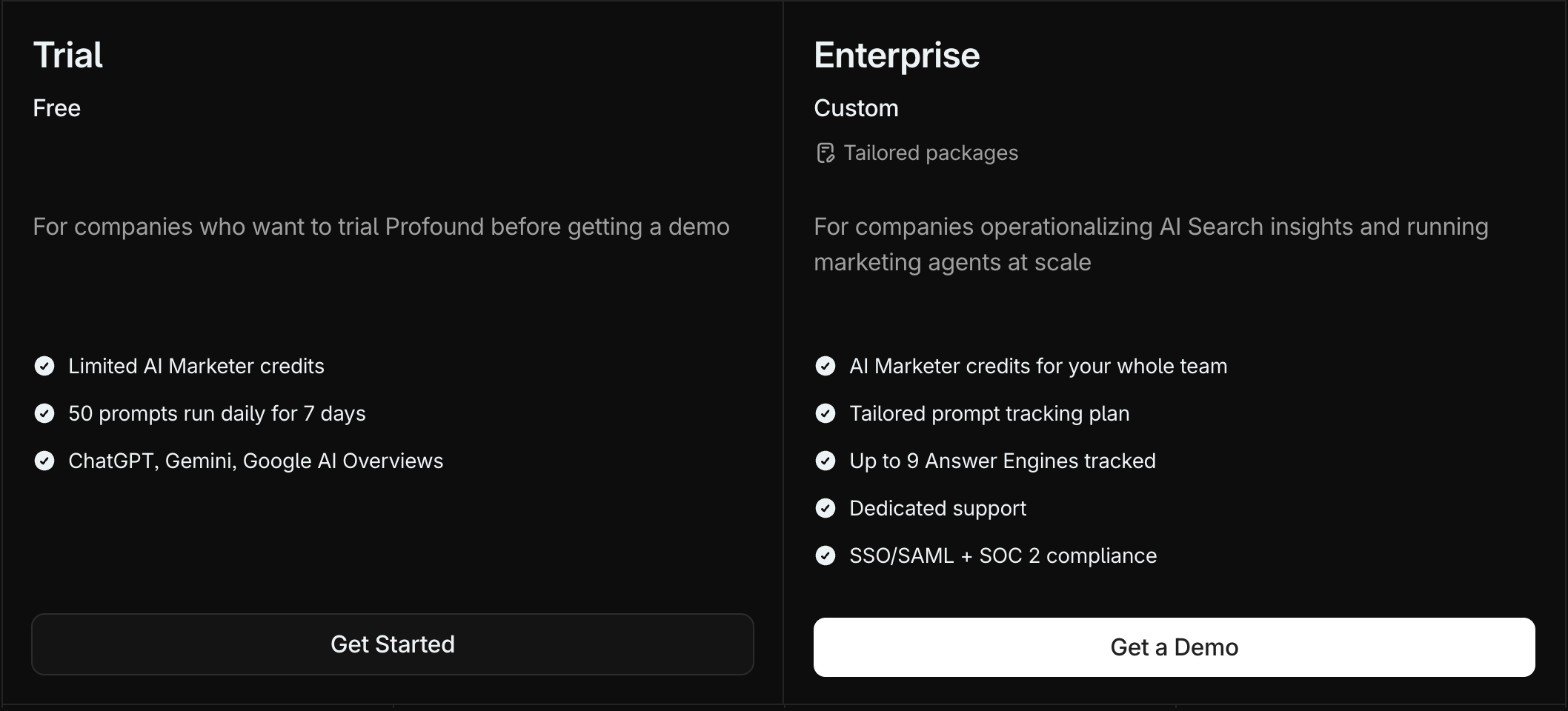
Prices alone mislead, because each plan tracks a different number of prompts. So I divided each monthly price by the prompts it includes. Bigger plans cost less per prompt.
Monthly list price per tracked prompt (US dollars)
Do you need a tracker?
- Not at the start. Ten questions across 3 engines take about 30 minutes by hand. My earlier article gives the steps.
- Pay when you outgrow the hand test. That means daily data, more than about 25 questions, several brands or markets, or a report for someone else.
- Add-ons add up. Semrush charges $99 for each extra domain and each extra user. Peec and Otterly sell extra engines as add-ons.
- A tracker only measures. Google also warns that “No third-party tool has access to our internal ranking or AI systems.” Treat any tool that promises ranking success with caution.
- Cheaper trackers exist. In my October tools comparison, the cheapest paid plan was $6.99 a month. That tool is AmasoAI, where I work in growth, so weigh my view accordingly.
See the HubSpot AEO, Semrush and Ahrefs pricing pages
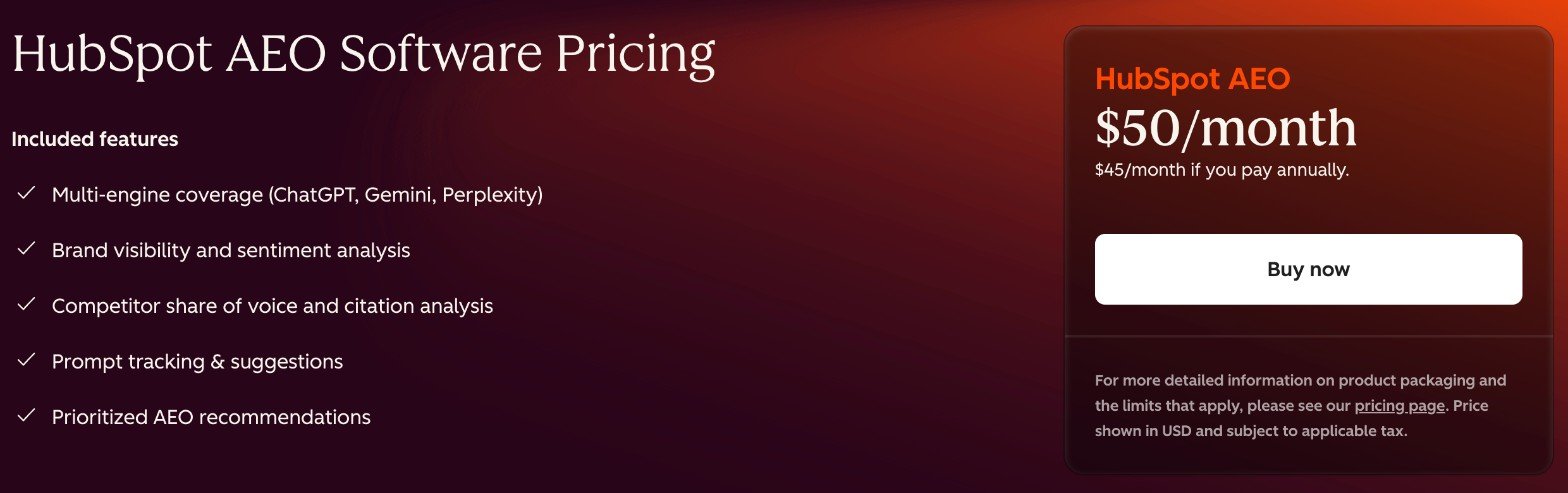
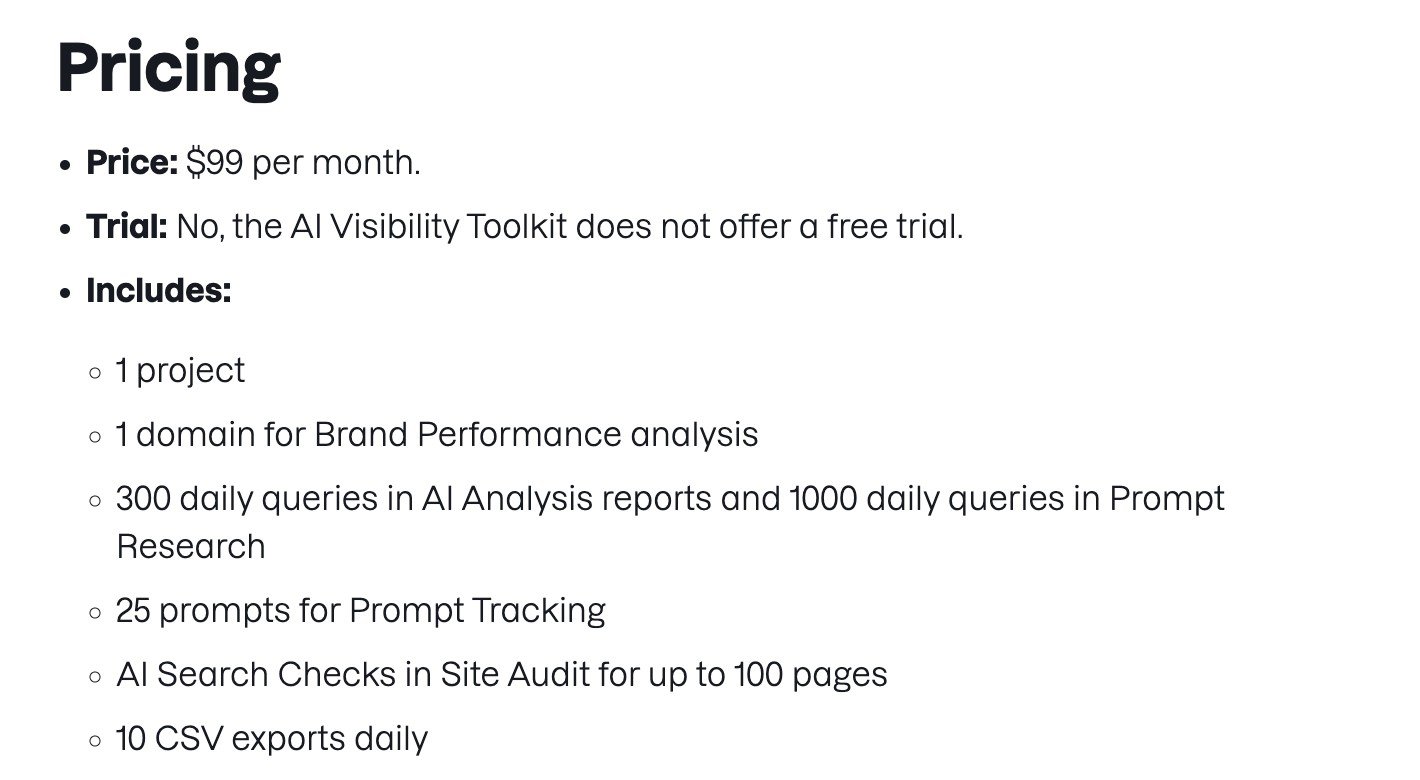
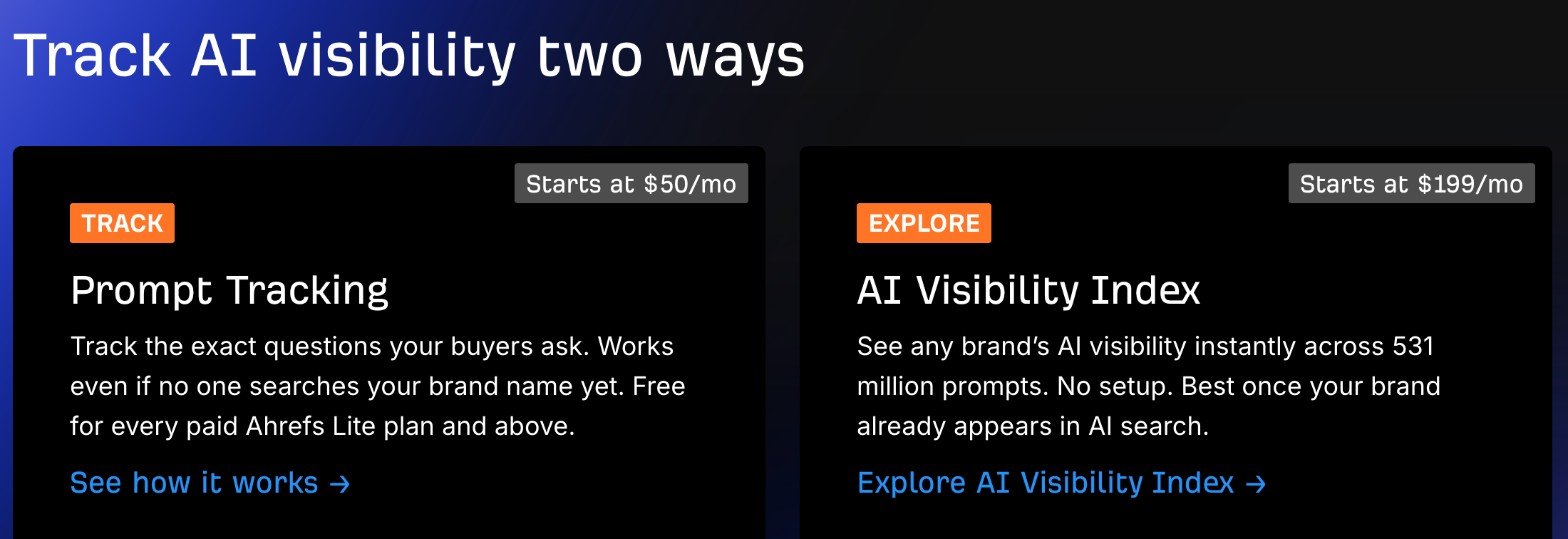
For a deeper look at eight tools, see my AI visibility tools comparison.
What agencies publish, and what they leave out
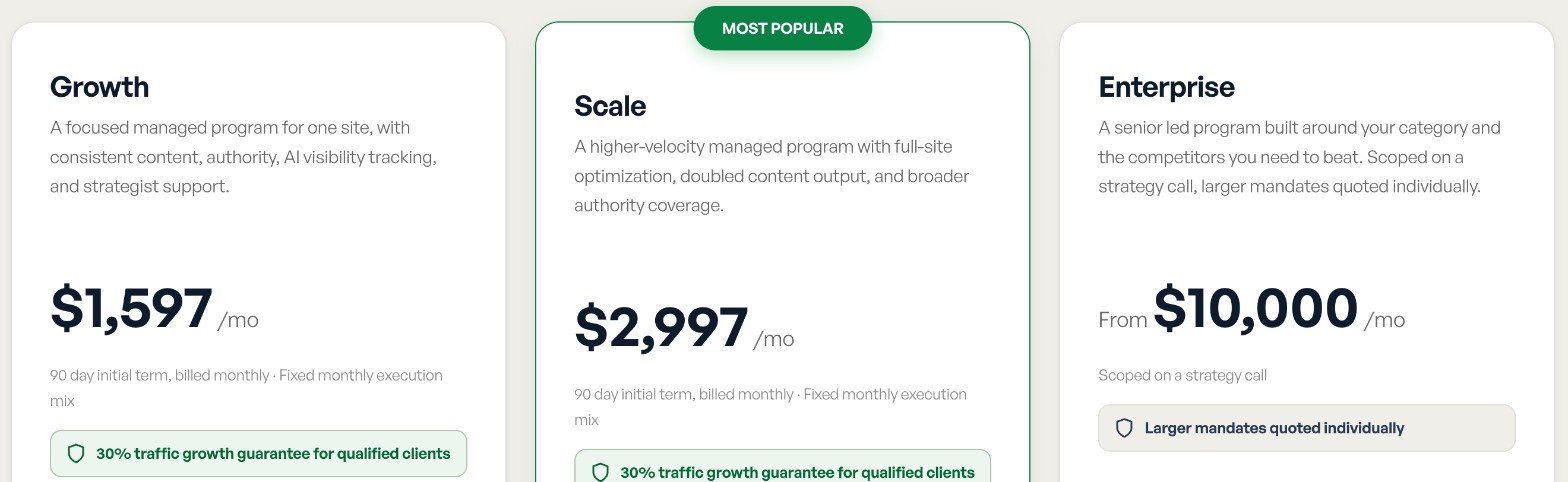
Most agencies sell by quote. Few post a price. I found 4 that do, plus one that posts a starting point. Here they are.
| Provider | Published price | Term | What I noticed |
|---|---|---|---|
| AEO Engine | $1,597 and $2,997 a month; enterprise from $10,000 | 90-day initial term, billed monthly | Growth lists 30 articles, 3 to 5 backlinks, 1 PR campaign a quarter and up to 150 tracked prompts |
| WebFX | “Starting at $3,000” a month | Custom proposal | Sells GEO next to its own tracking tool |
| MO Agency (South Africa) | From R22,500 a month, or R45,600 for the larger retainer | 12 months, or a 3-month minimum | Bundles SEO, AEO and content. Excludes ad spend, link fees, software and web builds |
| upGrowth (India) | Audits ₹2,50,000 to ₹4,00,000; typical retainer ₹2,00,000 a month | Not stated | A “typical engagement size,” not a rate card |

Four details matter more than the headline price.
- Scope sets the price, not the label. AEO Engine’s Growth plan lists 30 articles a month. My Starter retainer lists 2. Both use the word “AEO.” They are not the same product.
- Terms differ. AEO Engine starts with 90 days. MO Agency asks for 12 months on its entry bundle. My retainers have a 3-month minimum, then 30 days’ notice.
- Read every guarantee. AEO Engine promises 30% more organic and AI search traffic in 90 days for “qualified” clients, or it keeps working without a management fee. The page lists conditions, such as access to your analytics and no site-wide changes, and says eligibility is confirmed before onboarding. It is a promise of free work, not of a result. Ask what triggers it.
- Currency matters. MO Agency and upGrowth price in rand and rupees. Convert at the day’s rate before you compare.
The SEO baseline
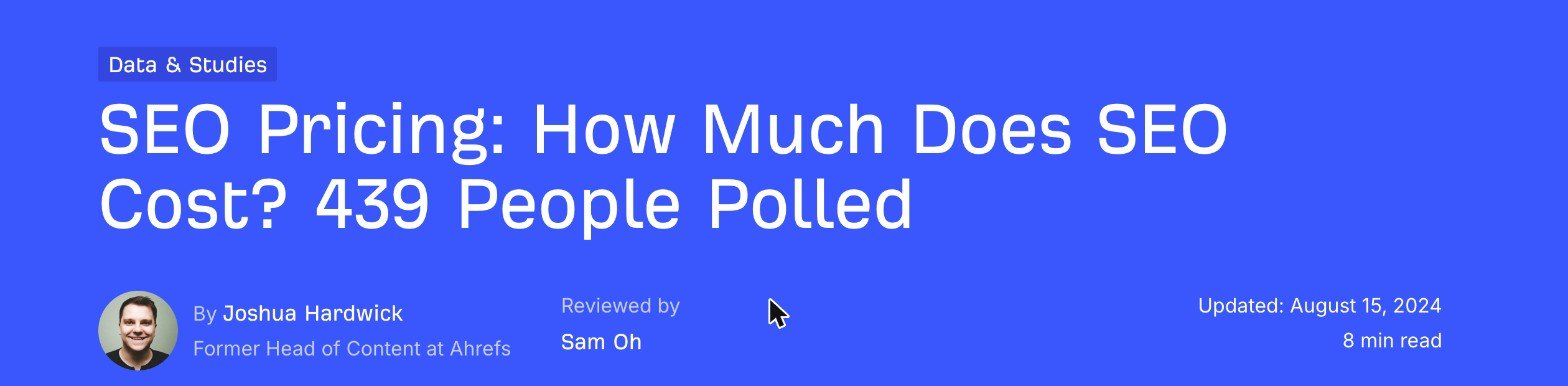
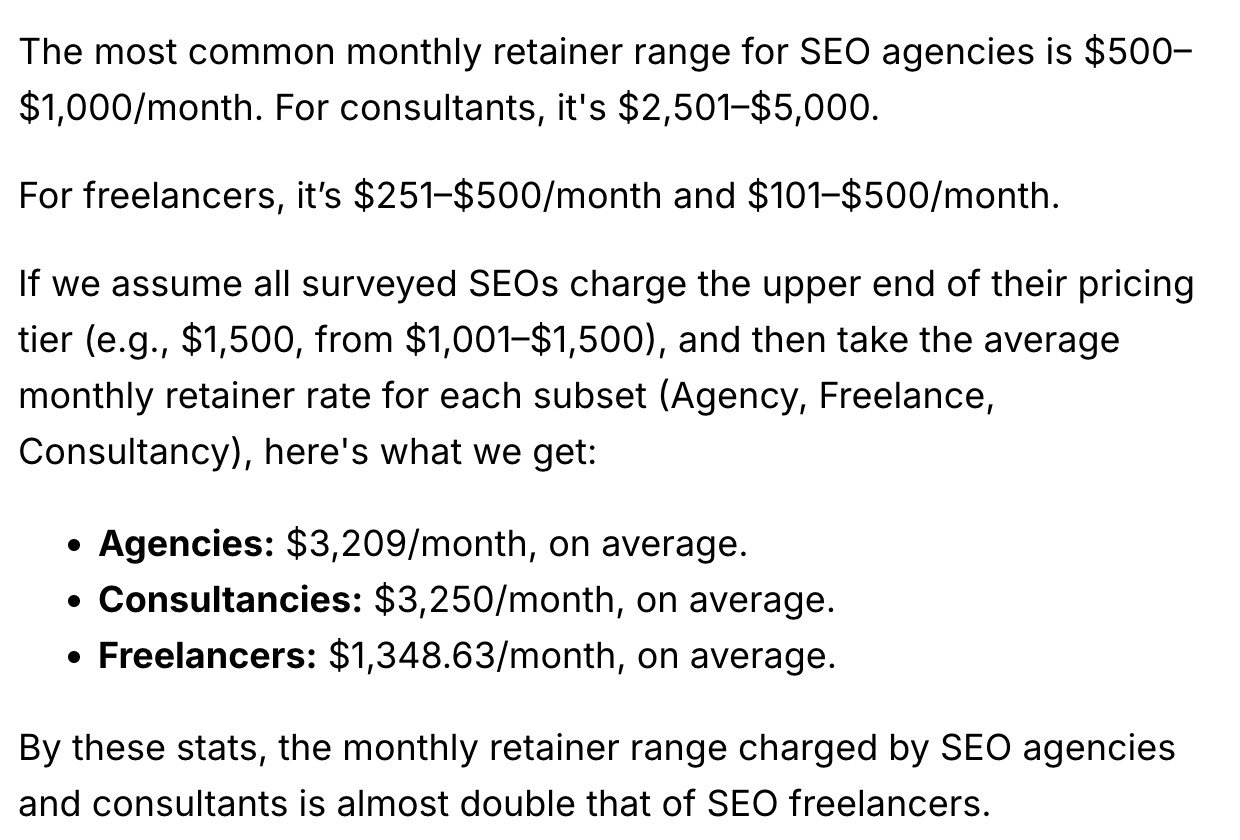
Because Google calls this work SEO, SEO prices give a fair floor. Ahrefs polled 439 SEO providers. Agencies averaged $3,209 a month in retainers and freelancers $1,348.63. The most common retainer band was $501 to $1,000, chosen by 20.4%. The average hourly rate was $111. Treat these as dated. The page shows an update date of August 15, 2024, and it does not say when the poll ran. Ahrefs also notes that its averages assume each provider charges the top of its tier.
What my own work costs
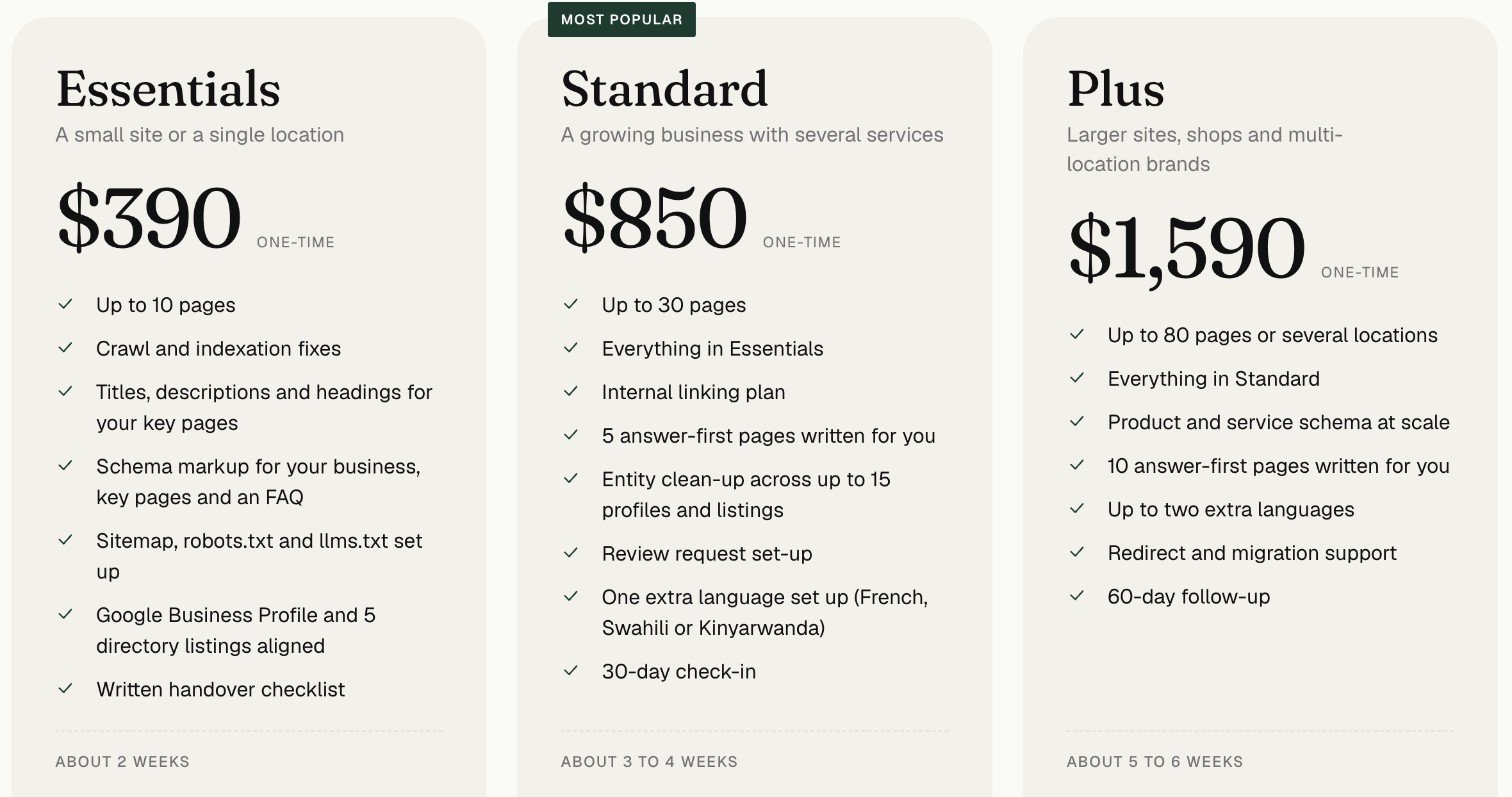
I sell this work, so here is my price list in full. It comes from my pricing page, read on November 5, 2026. All prices are in US dollars, and I can quote in Kenyan, Rwandan, Tanzanian or Ugandan currency on request.
Free: the AI visibility audit. It scans your site, scores it out of 100, lists your top fixes and checks what ChatGPT, Gemini and Perplexity say about you. You get an emailed report within one business day.
| One-time build | Price | Time | What it covers |
|---|---|---|---|
| Essentials | $390 | About 2 weeks | Up to 10 pages, crawl and indexing fixes, titles and headings, schema, sitemap, robots.txt and llms.txt, Google Business Profile and 5 directory listings |
| Standard | $850 | 3 to 4 weeks | Up to 30 pages, an internal linking plan, 5 answer-first pages, up to 15 profiles cleaned up, review setup, 1 extra language |
| Plus | $1,590 | 5 to 6 weeks | Up to 80 pages or several locations, product and service schema at scale, 10 answer-first pages, up to 2 extra languages, migration support |
| Monthly retainer | Price | Content and tests | Extras |
|---|---|---|---|
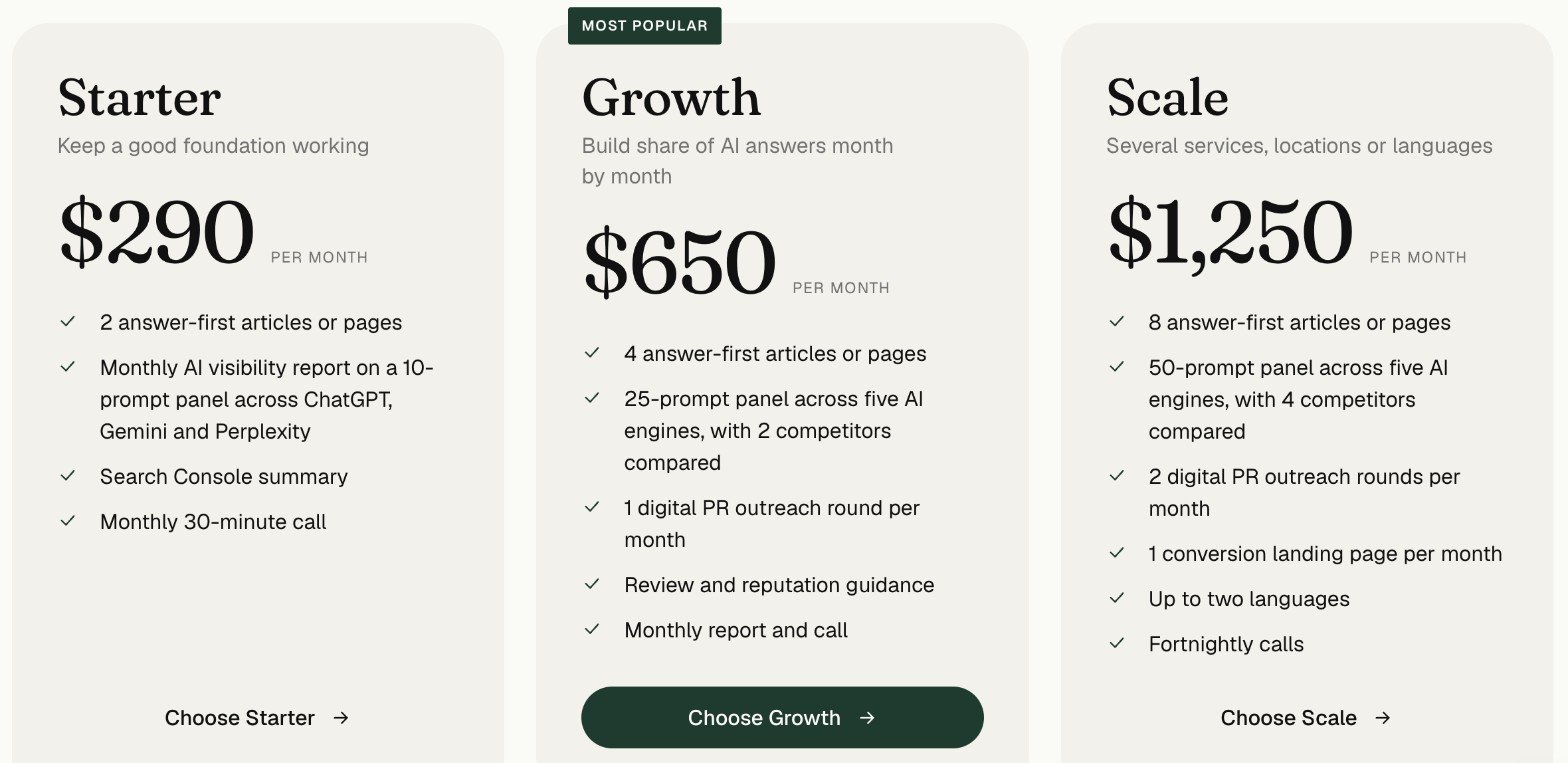
| Starter | $290 | 2 articles or pages, a 10-prompt panel | Search Console summary, monthly 30-minute call |
| Growth | $650 | 4 articles or pages, a 25-prompt panel on 5 engines | 2 competitors compared, 1 outreach round a month, review guidance |
| Scale | $1,250 | 8 articles or pages, a 50-prompt panel on 5 engines | 4 competitors, 2 outreach rounds, 1 landing page, fortnightly calls |
| Single item | Price | What you get |
|---|---|---|
| Answer-first article | $80 | 800 to 1,200 words, sourced, with FAQ and schema |
| Schema markup pack | $220 | Schema for up to 10 page templates |
| Business Profile and directory clean-up | $180 | Profile fixed and up to 10 listings aligned |
| Review request system | $160 | Templates, QR code, WhatsApp flow and a reply guide |
| Digital PR outreach round | From $220 | Pitches to publications and list authors. No placement is guaranteed, and publisher fees are agreed first |
| Manual AI visibility report | $120 | 25 prompts across 5 engines, with a written summary |
How can I charge less than a large agency? I am one person in Kigali with low overhead, and my scope is smaller than a team’s. A 30-article program is a bigger job than a 2-article one. Compare deliverables, not names. Single-item prices are credited if you move to a build within 60 days.
Where the money should go
If you have a small budget, order matters. Here is the order I would use, based on what I saw and what the sources say.
- Get listed and reviewed first. In my test, ChatGPT and Perplexity quoted star ratings and review counts for local businesses. A Business Profile and directory clean-up costs $180 from me and $0 if you do it yourself. A review request system costs $160.
- Write one page per buying question. An article costs $80 from me. Writing one yourself takes time: Orbit Media’s 2026 survey of 1,042 content marketers found the average post took 3 hours and 20 minutes and ran 1,312 words.
- Earn mentions on other sites. This is the job that scales with budget. Outreach rounds start at $220 from me. Agency programs bundle them at higher prices.
- Buy a tracker last. Measure by hand until the hand test becomes a burden.
Now the skip list.
- Do not pay a premium for llms.txt, special schema or “chunking” alone. Google says you do not need them for its AI features. I still add accurate schema and an llms.txt file inside a build, because they take minutes. I would not pay extra for them.
- Do not buy sponsored posts as AI visibility. Paid and advertorial content made up just 0.3% of the citations in Muck Rack’s September data. Ask for earned placements instead.
- Do not pay for a promise. Rankings and citations vary by user and by day. Pay for deliverables you can count.
For the full list of causes behind a missing business, and the fix for each, read why your business isn’t showing up in ChatGPT or Google.
A 6-month budget for 3 paths
Numbers help, so here is a worked example. Picture a local service business with one location and a 30-page site, like the Austin dentists in my earlier test. This is a model, not a case study. It uses the list prices above.
| Path | What it covers | Cash, 6 months | Your time |
|---|---|---|---|
| 1. DIY by hand | A monthly 30-minute test, profile fixes, 1 new page a month | $0 | About 43 hours |
| 2. DIY plus a tracker | The same, plus HubSpot AEO at $50 a month | $300 | About 43 hours |
| 3. Build plus light retainer | My Standard build ($850) plus the Starter retainer for 6 months ($1,740) | $2,590 | A few hours a month for approvals and review requests |
| 4. A published-price agency | AEO Engine Growth at $1,597 a month, or WebFX from $3,000 a month | $9,582 to $18,000+ | Ask for the weekly workload |
The DIY hours are my estimate. Setup takes about 13 hours: 30 minutes for the test, 2 hours for profiles and 10 hours for 3 pages at Orbit Media’s average. Then each month takes about 5 hours: the test, an hour of review requests and one page. Six months comes to about 43 hours. At $50 an hour, that is $2,150 of your time. At $100 an hour, it is $4,300. So DIY is cheap in cash and expensive in attention.
Cash cost over 6 months (US dollars)
The break-even math
Before you buy, work out how many new customers the spend must add. Use this formula: cost divided by gross profit per new customer. Use profit, not revenue.
| Gross profit per customer | $2,590 budget | $9,582 budget | $18,000 budget |
|---|---|---|---|
| $200 | 13 customers | 48 customers | 90 customers |
| $1,000 | 3 customers | 10 customers | 18 customers |
| $5,000 | 1 customer | 2 customers | 4 customers |
| $25,000 | 1 customer | 1 customer | 1 customer |
Read the table twice. A dentist who earns $200 on a cleaning needs far more wins than a firm that earns $25,000 on a contract. High-value services can justify bigger budgets. Low-value ones cannot.
Demand exists. BrightLocal’s 2026 survey found that 45% of US adults used AI tools for local business recommendations in the past year. Yet Pew found that people click a regular result on 8% of visits that show an AI summary, versus 15% without one. So buyers see names more than links. Count inquiries, not visits. Ask every new customer, “How did you find us?” and add an AI channel in GA4.
I cannot tell you how many customers a program will add. Nobody can. Instead, set a stop-loss. Decide before you start what you must see after 3 months to justify 3 more.
6 costs nobody puts in the quote
- Your time. Approvals, interviews, photos, review requests. A good provider tells you the hours.
- Seats and extras. Semrush adds $99 per extra user. Otterly and Peec charge for extra engines.
- Third-party fees. MO Agency lists link placement fees as excluded. I agree publisher fees with you before any outreach.
- Ad spend. MO Agency’s bundle manages ads, but the spend itself is extra.
- Website work. MO Agency quotes a full website build separately, from R180,000. A slow or broken site undercuts every other fix.
- The exit. A 12-month term costs 12 months, even if month 3 shows nothing. Check the notice period.
10 questions to ask before you pay
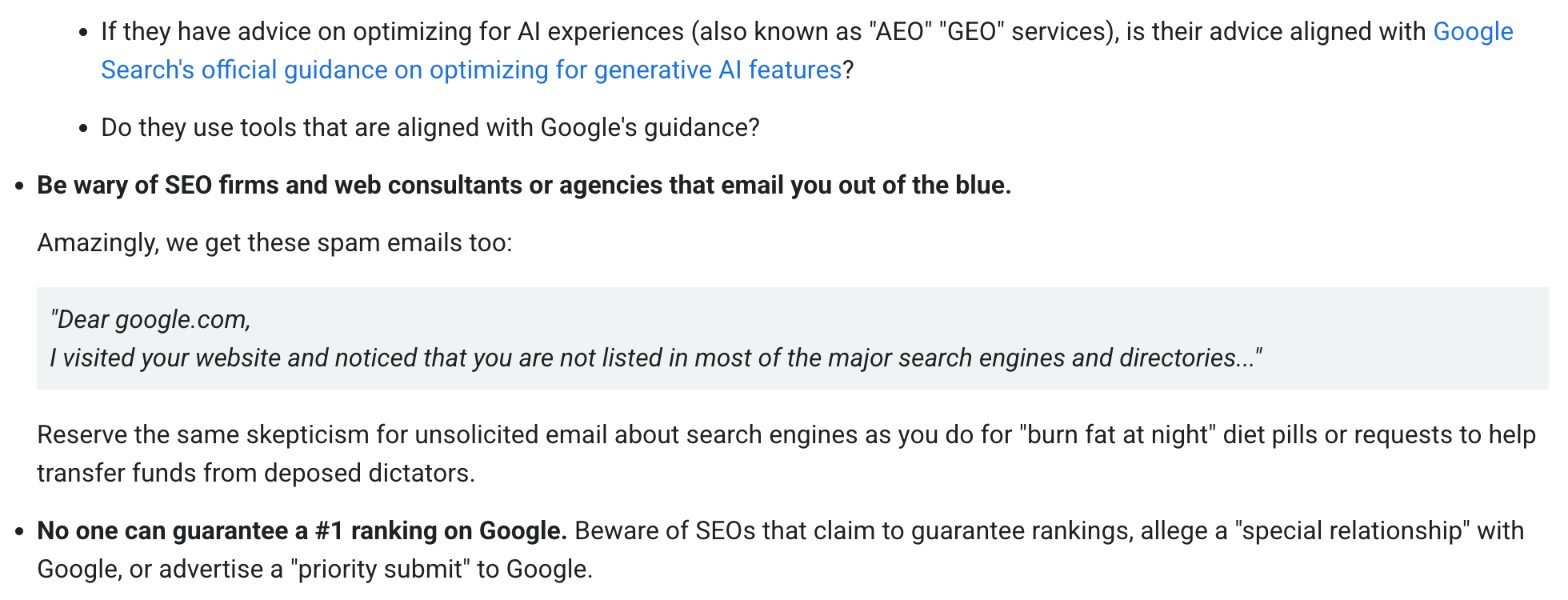
Google’s own hiring advice tells you to ask for past work, expected results and a timeframe, and to walk away from anyone secretive or anyone who guarantees first place. Its page now adds a question for this market: if a provider sells “AEO” or “GEO” services, is the advice aligned with Google’s official guidance on generative AI features? I added the questions that apply to AI search.
| Ask | A good answer | A red flag |
|---|---|---|
| 1. Which of the 3 jobs does this price cover? | Names measure, fix and mentions, with amounts | “Everything” or “AI optimization” |
| 2. What do I get each month, in numbers? | Pages, listings, outreach rounds, prompts tracked | “Strategy and optimization” |
| 3. Who does the work? | A named person you can talk to | Secrecy about the plan |
| 4. Which questions will you test, and where? | Your 10 to 25 buyer questions, on named engines, in writing | Only your brand name as the test |
| 5. How will we know it worked? | A baseline run first, the same panel monthly, inquiries tracked | A “visibility score” and nothing else |
| 6. What are the term and the exit? | A short minimum and written notice | Long lock-in with no exit |
| 7. What does the price exclude? | Lists ad spend, fees, tools and web work | Surprise add-ons later |
| 8. What would you not do? | Skips llms.txt-only deals and sponsored posts, and says why | Sells every tactic |
| 9. Can I see dated past work? | Dated examples and a client you can call | Screenshots with no dates |
| 10. Do you guarantee a result? | “No. I guarantee deliverables and honest reporting.” | A promised rank or citation, or a “special relationship” with Google |
Which path fits you
| Your situation | Start here | Typical cash |
|---|---|---|
| One location, small site, time to spare | Free audit, the 30-minute test, profile fixes | $0 to $180 |
| One location, no time | Standard build, then the Starter retainer | About $2,590 over 6 months |
| Several locations or 80 or more pages | Plus build, then the Growth retainer | About $5,490 over 6 months |
| B2B or services with strong rivals | Mentions first: Scale or an agency tier | $1,250 to $5,000 a month |
| Many markets or brands | A scoped program, priced per market | $10,000+ a month |
The Plus path is $1,590 plus 6 months at $650, or $5,490. The $1,250 to $5,000 band comes from my Scale price and the small-business tier that WebFX and Stackmatix list.
How long before you can judge it
Give any program 3 months before you decide. Fixes show up at different speeds. OpenAI says its systems take about 24 hours to adjust after a robots.txt change. Rankings are slower: Ahrefs found that 6.11% of 2 million new pages reached the top 10 within a year. My earlier article has the full timeline.
- Week 0: run your 10 questions and save screenshots. This is your baseline.
- Day 30: confirm the fixes are live. Check indexing, profiles and reviews.
- Day 90: run the same questions again. Compare names, positions and inquiries. Then renew, change or stop.
The 90-day term at AEO Engine and my 3-month minimum follow the same logic.
Where I come in
I spent six years writing for crypto and finance outlets, where a wrong number costs readers money. Now I test what AI engines say about brands and publish the data. If you want a second pair of eyes, start with the free audit. It scores your site out of 100, lists the top fixes and checks what ChatGPT, Gemini and Perplexity say about you. I cannot promise a ranking or a citation. I can promise a clear fix list, a price you can read and honest reporting.
Run the free AI visibility audit
See every price on my pricing page, contact me, or read my pages on AEO and GEO.
How I checked, and the limits
- One snapshot. I read every price on November 5, 2026. Vendors change prices often. Check the page before you buy. List prices exclude tax.
- What I read. I opened 7 vendor pages in a browser and saved a screenshot of each: Otterly.AI, Peec AI, HubSpot AEO, Semrush, Ahrefs Brand Radar, Profound and AEO Engine. I saved dated screenshots of the passages I quote from WebFX, Nutshell, MO Agency, Muck Rack, Ahrefs, Google and my own pricing page. I read upGrowth as text, and I did not click through any cookie or terms prompt except to decline optional cookies.
- Guides are claims. Most of the 6 guides come from sellers. Their ranges are marketing estimates, not market data. WebFX and Nutshell list identical ranges, and I could not trace the source.
- Published prices only. I did not ask any agency for a quote, so real quotes may differ. I did not ask Profound for its price.
- Gaps in the pages. Ahrefs shows “starts at” prices and no per-tier prices. Profound posts none.
- Dated survey. The Ahrefs poll is about SEO, not GEO. Its page shows an update date of August 15, 2024 and gives no poll date.
- My arithmetic. Cost per prompt, 6-month budgets and break-even tables come from list prices and made-up customer values. The DIY hours are my estimate.
- Not like for like. My Starter retainer is not a 30-article program. Read the scope column, not the price.
- Muck Rack. It sells a tool in this space. “Earned” includes many source types, and a share of citations does not prove cause.
- No guarantees. Nobody controls what ChatGPT, Perplexity or Google say about you.
Related reading: why your business isn’t showing up in ChatGPT or Google, 8 AI visibility tools compared, how to check what ChatGPT says about your business and SEO, AEO and GEO explained.
Frequently asked questions
How much does AI search optimization cost?
It costs anywhere from $0 to $50,000 a month, because the name covers 3 jobs: measuring, fixing your own site and earning mentions. Tracking tools cost $29 to $495 a month on the pages I read. One-time builds cost $390 to $1,590 from me. Managed programs start near $290 a month and run to $10,000 or more.
How much does GEO cost for a small business?
A small business can start for $0 to about $2,600 in the first 6 months. That covers a free audit and the 30-minute test, or an $850 build plus a $290 monthly retainer. Agency guides put small-business retainers at $1,500 to $5,000 a month, and those programs list far more output.
Is GEO more expensive than SEO?
Not by nature. Google says optimizing for generative AI search is still SEO. Ahrefs found agencies averaging $3,209 a month in SEO retainers and freelancers $1,348.63, in a dated poll. GEO guides quote $1,500 and up for agencies, so the ranges overlap.
Are AI visibility tools worth paying for?
Only once the hand test becomes a burden. Ten questions across 3 engines take about 30 minutes by hand. Plans cost $29 to $495 a month and run from 15 to 350 prompts. A tracker measures. It does not change what AI says about you.
Can I do AI search optimization myself for free?
Yes, but not for free in time. I estimate about 43 hours over 6 months: 13 hours of setup and about 5 hours a month. At $50 an hour that is $2,150. Free tools cover the cash cost. Your hours are the price.
What is the cheapest sensible way to start?
Run the free AI visibility audit and the 30-minute test. Then fix your Business Profile and directory listings, which cost $180 from me or $0 yourself, and ask happy customers for reviews. Those steps target the causes behind most misses.
How much should I spend per month?
Work backward from break-even. Divide the total cost by your gross profit per new customer. If the answer is 1 to 3 customers over 6 months, the budget is easy to defend. If it is 40, think again. Then set a 3-month stop-loss.
Why are the quotes so different?
Scope. A $29 tracker only measures. A $390 build fixes a small site once. A $10,000 program pays a team to earn mentions across many markets. Many quotes also hide which of those jobs they cover, so ask for deliverables in numbers.
Do I have to sign a 12-month contract?
No. AEO Engine lists a 90-day initial term billed monthly, my retainers have a 3-month minimum then 30 days’ notice, and MO Agency asks 12 months on its entry bundle. Check the term and the exit before you pay.
Does paying for sponsored content get me into AI answers?
Do not count on it. Muck Rack found that paid and advertorial content made up 0.3% of AI citations in September 2026. Earned sources made up more than 84%. Ask for earned placements, reviews and listings instead.
Do I need llms.txt or special schema, and should I pay extra for it?
No. Google says you do not need new machine readable files or special markup for its AI features. Accurate schema still helps with ordinary search features, and an llms.txt file takes minutes. Do not pay a premium for either on its own.
Can anyone guarantee I will be cited or recommended?
No. Google says no one can guarantee a #1 ranking, and AI answers vary by user and by day. Some providers guarantee free work if a traffic target is missed, with conditions. Read those terms and ask what triggers them.
How long before I see results?
Judge a program after 3 months. OpenAI says robots.txt changes take about 24 hours to take effect, but rankings and mentions build slowly. Run your 10 questions at week 0, day 30 and day 90, and compare names, positions and inquiries.
Can you quote me in local currency?
Yes. My prices are in US dollars, and I can quote in Kenyan, Rwandan, Tanzanian or Ugandan currency on request. MO Agency and upGrowth publish in rand and rupees, so convert at the day’s rate before you compare.